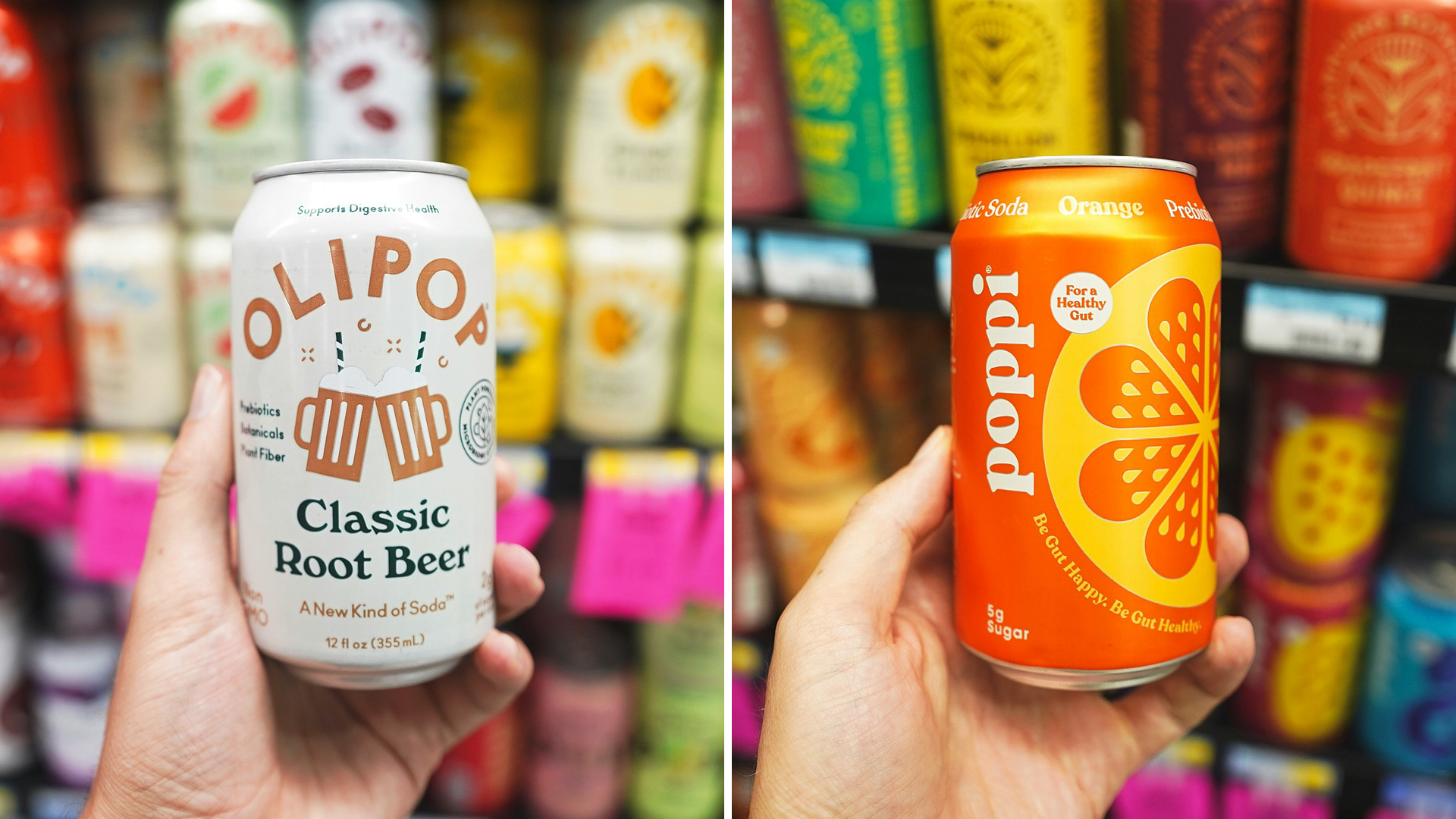
“How Do I Spot the Next Poppi Before Everyone Else Does?” (The Early Signals That Separate $2B Exits from $10M Plateau Brands)
So I got this email from a reader after the consumer VC recovery post I shared last week:
“David, I read the last breakdown you made on Huel after their acquisition by Danone, and now this one. The Creators Blueprint is a newsletter I now often anticipate. But I have a question based on this particular post. If functional beverages are now proven and crowded, what specific early signals separate the next Poppi from the dozens of well-funded brands that will plateau at $5–10M revenue?”
This is THE question.
Because you’re right, functional beverages are now proven. Which means everyone and their mother is launching one.
In the last 18 months alone:
50+ prebiotic soda brands launched
30+ adaptogenic drinks
20+ electrolyte beverages with “functional benefits”
Maybe 2-3 will actually matter
The hit rate in functional beverages is brutal:
100 brands launch
90 plateau at $1-5M revenue (lifestyle businesses or failures)
8 get to $10-30M revenue (solid but not venture-scale)
2 break $100M+ revenue (Poppi, Olipop territory)
0.5 exit for $1B+ (Poppi is the outlier, not the norm)
So the question becomes:
How do you spot the 0.5% winner when it’s still at $5M revenue before Pepsi writes the $2B check?
I’ve spent the last few days thinking about this (and pulling data on Poppi’s early years vs. the brands that died). Let me show you the seven early signals that separate billion-dollar exits from brands that plateau and why most investors/operators miss them.
Signal #1: Founder Has “Category Insider + Outsider” DNA (Not Just One)
The pattern everyone misses:
The best functional beverage founders aren’t beverage experts. But they’re not total outsiders either.
They’re hybrids.
Poppi (Allison Ellsworth), The Perfect Hybrid:
Insider knowledge:
Husband Stephen Ellsworth worked in grocery (HEB, regional chain)
Understood retail dynamics, slotting fees, distributor relationships
Knew how to get into stores (critical for beverage scale)
Outsider perspective:
Allison was a blogger/influencer (not beverage industry)
Saw trends from consumer side (what people actually wanted)
Didn’t have “industry blinders” (wasn’t stuck in “this is how beverages work”)
The combination:
Insider = Could navigate retail (distribution is the moat in beverages)
Outsider = Saw prebiotic trend before beverage industry did
Hybrid = Could build category-defining brand AND get it into 50K stores
For comparison, brands that failed:
Pure insiders (beverage industry veterans):
Launch traditional beverage with “functional twist”
Can get distribution (they have relationships)
But positioning is boring (sounds like every other beverage)
Plateau at $10-20M (distributors carry it but consumers don’t care)
Pure outsiders (influencers, wellness founders):
Launch innovative positioning (great branding, unique angle)
Can’t get distribution (don’t know retail)
DTC-only, can’t scale past $5M
Plateau at $3-8M (great product, no path to scale)
The early signal: When evaluating a functional beverage brand at $2-5M revenue, ask:
Does the founder understand retail distribution? (Insider knowledge)
Do they know what slotting fees are?
Do they have existing distributor relationships?
Have they worked in grocery/beverage before?
Does the founder see consumer trends before the industry? (Outsider perspective)
Are they plugged into wellness/health communities?
Do they have audience/following outside of beverage world?
Are they creating new category or just copying existing?
If both = yes, that’s Signal #1. If only one = plateau risk.
Signal #2: They Cracked “Occasion-Based Positioning” (Not Benefit-Based)
This is the most underrated signal.
Most functional beverage brands position on benefits:
“Supports gut health”
“Boosts immunity”
“Enhances focus”
Winners position on occasions:
“Instead of soda with lunch”
“After morning workout”
“3pm desk slump replacement”
Why this matters:
Benefit positioning = narrow TAM
Only people who care about gut health buy it
Requires consumer education (expensive)
TAM: 5-10M health-conscious consumers
Occasion positioning = massive TAM
Everyone eats lunch, works out, has afternoon slump
Replaces existing behavior (easier adoption)
TAM: 50-100M+ people
Poppi’s genius:
Early Poppi positioning (2018-2020): “Prebiotic soda for gut health”
Revenue: Struggled to break $5M
Why?
Only appealed to people who (a) knew what prebiotics were AND (b) cared about gut health
Required education (”What’s a prebiotic?” “Why do I need this?”)
Narrow positioning = slow growth
Revised Poppi positioning (2020-2022): “Soda that’s good for you”
Occasion = soda replacement
Lunch with burger
Movie night snack
Afternoon refreshment
Any time you’d drink Coke, drink Poppi instead
Revenue: $5M → $50M → $200M → $400M
The shift:
From “prebiotic gut health drink” (benefit)
To “healthy soda” (occasion replacement)
Unlocked 20x larger TAM
For comparison, brands that plateau:
Culture Pop:
Positioning: “Probiotic soda for digestive wellness”
Occasion: Unclear (when do you drink this?)
Revenue: Stuck at $8-12M
Health-Ade Kombucha:
Positioning: “Fermented tea for gut health”
Occasion: Health ritual (very narrow)
Revenue: $100M+ but took 10+ years (slow growth, narrow positioning)
Olipop (the other winner):
Positioning: “Soda with digestive health benefits”
Occasion: Soda replacement (lunch, dinner, snack)
Revenue: $500M+ in 6 years (occasion-based positioning = fast growth)
The early signal:
When a brand is at $2-5M revenue, ask: “When do people drink this?”
If the answer is:
“When they want to support their gut health” → Plateau risk
“When they’d normally drink soda” → Winner potential
Occasion-based positioning = 5-10x larger TAM = venture-scale outcome possible.
Benefit-based positioning = niche forever.
Signal #3: DSD Distribution BEFORE DTC Scale (Counterintuitive but Critical)
Here’s where everyone gets this backwards:
Most beverage founders think:
Build brand via DTC ($5-10M revenue)
Prove demand
Then approach distributors
Scale through retail
This is wrong for beverages.
Winners do:
Get into local/regional DSD (Direct Store Delivery) early
Prove retail velocity (units per store per week)
Use retail traction to raise VC
Then scale DTC + national retail simultaneously
Why DSD-first matters:
Beverages are different from other CPG:
Heavy (shipping costs kill DTC margins)
Low AOV ($30-40 for 12-pack, $5-7 shipping = terrible economics)
Impulse purchase (people buy in-store, not online)
DTC doesn’t work for beverages the way it works for beauty/supplements
Poppi’s actual path (this is public):
2018-2019: Texas regional DSD
Started in Dallas/Fort Worth
Got picked up by KeHE (natural distributor)
Proved: 3-5 units per store per week velocity
Revenue: $1-3M (mostly Texas retail)
2019: Shark Tank
Rohan Oza invested $400K for 25% (appeared to be terrible deal)
But Rohan = beverage distribution god (scaled Vitaminwater, Bai, Smartwater)
Rohan opened: Big Geyser (NYC DSD), UNFI (national), DPI (Southwest)
Revenue: $3M → $10M (distribution explosion)
2020-2021: National DSD buildout
Used Shark Tank + early retail traction to raise VC
CAVU invested (beverage-focused PE)
Expanded DSD to 20,000+ stores
Revenue: $10M → $50M → $150M
2022-2023: DTC as complement (not foundation)
DTC grew BUT only represents 15-20% of revenue
Retail is 80-85% of revenue
DTC exists to capture superfans, not build the business
For comparison — brands that plateau:
Pure DTC beverage brands:
Build to $3-5M revenue DTC
Can’t get retail distribution (don’t know DSD)
Shipping costs destroy margins
Stuck at $5-8M (DTC ceiling for heavy/low-AOV products)
Example: Dozens of adaptogen/nootropic drinks
Great branding, strong DTC
$3-8M revenue
Can’t crack retail (no DSD relationships)
Plateau forever
The counterintuitive truth:
You can have the best brand in the world. If you can’t get into 10,000+ doors via DSD, you’ll never break $20M revenue.
The early signal:
When a functional beverage brand is at $2-5M revenue, ask: “What percentage is retail vs. DTC?”
If the answer is:
“95% DTC, we’ll do retail later” → Plateau risk (they don’t understand beverage economics)
“60% retail via regional DSD, 40% DTC” → Winner potential (they understand distribution is the game)
Bonus signal:
“We’re working with Big Geyser / KeHE / UNFI / DPI” → These are the DSD networks that scaled Vitaminwater, Poppi, Olipop
“We’re doing our own distribution” → They’re about to learn a very expensive lesson
Signal #4: They Have “Influencer-Proof” Growth (Not Influencer-Dependent)
This one’s sneaky but absolutely critical.
Here’s the test:
Month 1-6 after they stop spending on influencer marketing:
Does revenue stay flat/grow? (Winner)
Does revenue drop 30%+? (Plateau brand)
Why this matters:
Influencer-dependent brands:
Revenue = function of influencer spend
Stop spending → revenue craters
These are marketing machines, not brands
Influencer-proof brands:
Revenue = function of word-of-mouth + retail velocity
Stop spending → revenue stays flat or grows slightly slower
These are real brands with organic demand
Poppi’s trajectory:
2020-2021: Heavy influencer spend
TikTok creators, Instagram wellness influencers
Paid partnerships, gifting campaigns
This got initial trial
2022-2023: Pulled back influencer spend
Focused budget on retail placement, in-store promos
Influencer spend dropped 40%+ (estimated)
Revenue still grew 100%+ (organic demand kicked in)
Why?
Retail velocity drove reorders (people bought in-store without influencer push)
Word-of-mouth from trial (people told friends)
Product sold itself after initial awareness
For comparison, brands that plateau:
Countless “viral” beverage brands:
Launch with massive influencer push
Hit $5M revenue in Year 1 (looks amazing)
Year 2: Maintain spend to maintain revenue
Year 3: Influencer costs up, revenue flat
Stuck at $5-8M (can’t scale profitably)
The pattern:
Revenue is rented (via influencer spend)
Not owned (via organic demand)
As soon as spend stops, revenue collapses
The early signal:
When a brand is at $2-5M revenue, ask: “What happens if they cut influencer spend by 50% next quarter?”
If the answer is:
“Revenue would drop 40%+” → Influencer-dependent (plateau risk)
“Revenue would stay flat or drop <20%” → Influencer-proof (winner potential)
How to test this from outside:
Look at their growth trajectory:
Steady linear growth (10-20% MoM for 12+ months) = organic demand kicking in
Spiky growth (50% one month, flat next month, 30% next) = paid marketing driving everything
Poppi/Olipop: Steady linear growth (organic demand)
Most $5M plateau brands: Spiky growth (paid marketing)
Signal #5: Retail Velocity Beats Category Average by 2x+ (The Only Metric That Matters)
Here’s the dirty secret of beverage distribution:
Getting into stores is easy. Staying in stores is hard.
The metric that determines everything: Units per store per week (velocity)
Category benchmarks (carbonated soft drinks):
Below 1 unit/store/week = will be delisted within 6 months
1-2 units/store/week = marginal, might survive
3-5 units/store/week = solid performer
6+ units/store/week = hero product, gets expanded distribution
Poppi’s early velocity (2019-2020 in Texas):
Whole Foods: 4-6 units/store/week
Target: 3-4 units/store/week
Average: 4-5 units/store/week (2x category average)
Why this mattered:
High velocity =
Retailers reorder more frequently (more revenue)
Retailers expand shelf space (more facings)
Retailers expand to more stores (regional → national)
Velocity creates flywheel
Low velocity =
Retailers question value of shelf space
Brand gets delisted
Death spiral
For comparison, brands that plateau:
Most functional sodas:
Launch into 500-1,000 stores
Velocity: 1-2 units/store/week (below threshold)
Get delisted within 12 months
Revenue: $3M → $5M → back to $2M (distribution loss)
The early signal:
When a brand is at $2-5M revenue, ask: “What’s their velocity in existing stores?”
If the answer is:
Below 2 units/store/week → Will plateau or die (poor product-market fit)
3-5 units/store/week → Solid, could scale (good product-market fit)
6+ units/store/week → Winner potential (excellent product-market fit)
How to find this if you’re not an insider:
Ask the founder directly (”What’s your velocity at Whole Foods?”)
Check secondary data (some distributors share this)
Watch for store expansion (if a brand goes from 100 Whole Foods → 400 Whole Foods in 6 months, velocity is strong)
Poppi went from:
500 stores (2019)
5,000 stores (2020)
15,000 stores (2021)
30,000 stores (2022)
50,000+ stores (2024)
That expansion = proof of velocity.
If velocity was weak, they’d have been delisted, not expanded.
Signal #6: They Solve “The Fridge Problem” (Repeat Purchase Behavior)
This is the unlock everyone misses.
The Fridge Problem:
You buy a functional beverage at Whole Foods. You drink it. You like it.
Question: Do you go back and buy a 12-pack? Or do you forget about it and buy regular soda next time?
Winners solve this.
Losers don’t.
How to test if a brand has solved The Fridge Problem:
Look at DTC subscription rate:
Below 15% of DTC = people forget to reorder (Fridge Problem unsolved)
15-30% of DTC = decent repeat (Fridge Problem partially solved)
30%+ of DTC = strong repeat (Fridge Problem solved)
Poppi/Olipop:
DTC subscription rate: 35-40% (estimated from interviews)
Retail repeat rate: 50-60% (people come back within 30 days)
Fridge Problem: Solved
Why they solved it:
1. Taste is good enough to replace soda:
Not “healthy but tolerable”
Actually “delicious AND healthy”
People choose it over Coke, not just tolerate it
2. Variety pack strategy:
12-pack with 4 flavors (3 of each)
Creates “collection” behavior
People want to try all flavors → repeat purchase
3. Fridge-stocking behavior:
Packaging encourages buying 12-packs
People put in fridge, drink over week
Becomes part of routine
For comparison, brands that plateau:
Most functional beverages:
Taste is “fine” (not crave-worthy)
People try once, don’t repeat
Fridge Problem: Unsolved
Example: Hundreds of kombucha brands
Trial rate: High (people curious)
Repeat rate: Low (taste is acquired, not crave-worthy)
Stuck at $3-8M (trial without repeat = no scale)
The early signal:
When a brand is at $2-5M revenue, ask:
“What percentage of customers who try it buy again within 30 days?”
If the answer is:
Below 30% → Fridge Problem unsolved (plateau risk)
30-50% → Fridge Problem partially solved (could scale with work)
50%+ → Fridge Problem solved (winner potential)
How to test this from outside:
Check DTC site: Do they offer subscriptions? What’s the % discount? (If 20%+ discount, they’re desperate for repeat)
Check reviews: Do people say “I’m addicted” or “I buy this weekly”? (Signals repeat behavior)
Check Amazon: Look at number of reviews per year (high review velocity = high repeat purchase)
Poppi on Amazon:
10,000+ reviews
Most say “I buy monthly” or “I’m hooked”
Fridge Problem: Solved
Signal #7: Founder Has “Irrational Persistence” on Single Bet (Not Pivoting Every 6 Months)
The final signal is psychological.
Most beverage founders:
Launch prebiotic soda
Doesn’t work immediately
Pivot to adaptogen drink
That doesn’t work
Pivot to electrolyte beverage
Never commit long enough to any one thing
Winners:
Launch prebiotic soda
Doesn’t work immediately
Keep iterating on prebiotic soda for 3-5 years
Figure out the formula, positioning, distribution
Finally break through
Poppi’s timeline:
2016-2018: Mother Beverage (original name)
Sold at Dallas farmers markets
Revenue: $100K/year
Most founders would have quit
2018: Rebranded to Poppi, appeared on Shark Tank
Still only $1M revenue
Still only Texas regional
Most founders would have pivoted to “the next trend”
2019-2021: Kept iterating on distribution, positioning
Same product (prebiotic soda)
Just better distribution, better positioning
Revenue: $1M → $10M → $50M → $150M
The persistence:
Allison Ellsworth spent 5 years selling the same basic product (prebiotic soda) before it broke through.
Most founders give up in Year 2.
For comparison — brands that plateau:
Founders who pivot:
Year 1: Prebiotic soda
Year 2: Not working, pivot to adaptogen
Year 3: Not working, pivot to nootropic
Never commit to one thing long enough to figure it out
The pattern:
Serial pivoting = never build brand equity in one category
Never achieve distribution depth in one category
Plateau at $3-5M (good at launching, bad at scaling)
The early signal:
When evaluating a founder at $2-5M revenue, ask: “How long have they been working on this specific product/category?”
If the answer is:
Less than 2 years → Too early to tell, might pivot
2-4 years → Committed, iterating
4+ years → Irrational persistence (winner trait)
And then ask:
“Have they pivoted categories in the last 2 years?”
If yes → Pivot risk (might abandon this too)
If no → Committed (will see it through)
Why irrational persistence matters:
Beverages take 4-7 years to hit scale:
Year 1-2: Build product, get initial distribution
Year 2-3: Prove velocity, expand regionally
Year 3-5: Raise VC, go national
Year 5-7: Hit $100M+ revenue, get acquired
Most founders quit in Year 2-3 (before the compounding kicks in)
Winners stay through Year 5-7 (irrational persistence pays off)
The Checklist: How to Spot the Next Poppi at $5M Revenue
Okay, so you’ve read all seven signals. Here’s how to actually use them:
When you see a functional beverage brand at $2-5M revenue, run this checklist:
Signal #1: Founder DNA
Founder has insider knowledge (retail/distribution/beverage experience)
Founder has outsider perspective (not stuck in industry norms)
Score: 1 point if both, 0 if only one
Signal #2: Occasion-Based Positioning
Brand positions on occasion (”instead of soda”) not benefit (”supports gut health”)
Occasion is daily/frequent (lunch, workout, afternoon slump)
Score: 1 point if yes to both, 0 if benefit-based
Signal #3: DSD Distribution First
50%+ of revenue is retail (not DTC)
Working with major DSD networks (Big Geyser, KeHE, UNFI, DPI)
Score: 1 point if yes to both, 0 if DTC-first
Signal #4: Influencer-Proof Growth
Revenue growth is steady/linear (not spiky)
Could sustain 50% influencer cut without revenue collapse
Score: 1 point if yes to both, 0 if influencer-dependent
Signal #5: Retail Velocity
Velocity is 3+ units/store/week in existing stores
Store count is expanding (retailers adding doors)
Score: 1 point if yes to both, 0 if velocity weak
Signal #6: Fridge Problem Solved
50%+ of customers repurchase within 30 days
DTC subscription rate is 30%+ (if applicable)
Score: 1 point if yes to one, 0 if neither
Signal #7: Irrational Persistence
Founder has worked on this specific product/category for 3+ years
No major category pivots in last 2 years
Score: 1 point if yes to both, 0 if pivot risk
Total Score:
0-2 points: Plateau brand (will likely stay at $5-20M revenue)
3-4 points: Solid brand (could reach $50-100M revenue, might get acquired)
5-6 points: Winner potential (could reach $200M+ revenue, strategic interest)
7 points: Rare (next Poppi/Olipop, track closely)
The Brands to Watch Right Now (Applying the Framework)
Let me run this framework on a few current functional beverage brands to show you how it works:
Brand #1: Culture Pop (Probiotic Soda)
Signal #1 - Founder DNA:
Founders are wellness entrepreneurs (outsider perspective ✓)
No deep retail/distribution background (insider knowledge ✗)
Score: 0
Signal #2 - Occasion Positioning:
Positioned on benefit (”probiotic for gut health”)
Not clear occasion replacement
Score: 0
Signal #3 - DSD Distribution:
In 2,000+ stores via KeHE
Retail-focused model
Score: 1
Signal #4 - Influencer-Proof:
Hard to assess from outside, but growth seems steady
Score: 0.5 (uncertain)
Signal #5 - Retail Velocity:
Not expanding rapidly (stuck at ~2,000 stores for 18 months)
Suggests velocity is marginal
Score: 0
Signal #6 - Fridge Problem:
Reviews suggest trial but not “I’m addicted” repeat behavior
Score: 0
Signal #7 - Persistence:
Founded 2020, still working on same product 4+ years later
Score: 1
Total: 2.5/7 → Plateau brand (likely stays at $10-20M)
Brand #2: Olipop (Prebiotic Soda): For Comparison
Signal #1: Founder DNA:
Ben Goodwin (founder) worked in beverage industry (Obi Probiotic Soda)
But brought outsider nutrition science perspective
Score: 1
Signal #2: Occasion Positioning:
“Soda alternative” (clear occasion = any time you’d drink soda)
Score: 1
Signal #3: DSD Distribution:
30,000+ stores via major DSD networks
Score: 1
Signal #4: Influencer-Proof:
Steady growth even as influencer spend plateaued
Score: 1
Signal #5: Retail Velocity:
Rapid expansion (proof of velocity)
Score: 1
Signal #6: Fridge Problem:
High Amazon review volume, people say “weekly purchase”
Score: 1
Signal #7 - Persistence:
Ben spent 7+ years building this (previous company Obi failed, kept iterating)
Score: 1
Total: 7/7 → Winner (already at $500M+ revenue, validates framework)
Brand #3: [Redacted New Launch]: Testing the Framework
I won’t name this brand publicly because they’re only at $3M revenue, but:
Signal #1 - Founder DNA:
Founder worked at KeHE (distributor) = insider
Came from wellness influencer world = outsider
Score: 1
Signal #2 - Occasion Positioning:
Positioned as “coffee alternative for afternoon energy”
Clear occasion (3pm slump)
Score: 1
Signal #3 - DSD Distribution:
Already in 800 stores via KeHE (Year 1!)
60% retail, 40% DTC
Score: 1
Signal #4 - Influencer-Proof:
Too early to tell (only 12 months in)
Score: 0 (too early)
Signal #5 - Retail Velocity:
Expanding from 800 → 2,000 stores in next 6 months
Retailers asking for more (velocity signal)
Score: 1
Signal #6 - Fridge Problem:
DTC subscription rate: 38%
Score: 1
Signal #7 - Persistence:
Only 1 year in (too early to assess)
Score: 0 (too early)
Total: 5/7 (unknown on 2) → Watch closely (winner potential if persistence holds)
The Uncomfortable Truth About Picking Winners
Here’s what I’ve learned after tracking 100+ functional beverage launches:
The hit rate is worse than you think:
Out of 100 functional beverage brands that launch:
90 will die or plateau at $1-5M (90%)
8 will reach $10-50M (8%)
1.5 will reach $100M+ (1.5%)
0.5 will exit for $500M+ (0.5%)
That’s a 0.5% hit rate for venture-scale outcomes.
Even with the seven-signal framework:
Brands scoring 5-6/7 have maybe 10-15% chance of $100M+ outcome
Brands scoring 7/7 have maybe 30-40% chance
There’s still massive luck involved (timing, distribution breaks, viral moments)
The honest answer to “how do I spot the next Poppi?”
You probably can’t with certainty.
But you can improve your odds from 0.5% to 10-15% by focusing on brands that score 5+ on the seven signals.
And if you find a 7/7 brand at $5M revenue?
Back it heavily.
Because even though it’s not guaranteed, those are lottery ticket odds worth taking.
What I’d Do If I Were Deploying Capital in Functional Beverages Right Now
If I had $5M to invest in functional beverages:
I would NOT:
Spray $250K across 20 brands (venture spray-and-pray)
Wait for brands to hit $50M revenue (too late, valuation too high)
Only invest in “proven” brands (Poppi is already $2B, you missed it)
I WOULD:
Find 3-5 brands at $2-8M revenue scoring 5+/7 on framework
Write $500K-1M checks at $10-20M valuations (15-25% ownership)
Help them with distribution (intro to DSD networks)
Accept that 2-3 will fail, 1-2 will return 5-10x, 0-1 will return 50-100x
The specific brands I’d target:
Criteria:
Score 5+/7 on framework
Revenue $2-8M (early enough for ownership, late enough for signal)
Raising seed/Series A ($2-5M round at $15-30M valuation)
Founder has beverage/distribution background + outsider perspective
Already in 1,000+ stores via DSD (proof they understand distribution)
Current brands that fit (as of April 2026):
2-3 exist (won’t name publicly, but if you’re serious about deploying capital, DM me)
The Final Answer to Your Question
You asked:
“If functional beverages are now proven and crowded, what specific early signals separate the next Poppi from the dozens of well-funded brands that will plateau at $5–10M revenue?”
The seven signals:
Founder has insider + outsider DNA (hybrid, not pure)
Occasion-based positioning (replaces soda, not “supports gut health”)
DSD distribution first (retail 50%+, not DTC-first)
Influencer-proof growth (organic demand, not paid marketing machine)
Retail velocity 3+ units/store/week (proof of product-market fit)
Fridge Problem solved (50%+ repeat purchase within 30 days)
Irrational persistence (4+ years on same product, no pivots)
Brands scoring 5+/7 have 10-15% chance of $100M+ outcome.
Brands scoring 7/7 have 30-40% chance of $100M+ outcome.
Brands scoring 0-4/7 will plateau at $5-20M.
But even with perfect signal detection, you’re still betting on a 10-40% hit rate.
Functional beverages are crowded because they’re proven.
And when a category is proven, capital floods in, competition intensifies, and hit rates compress.
The real alpha isn’t just finding the right signals.
It’s finding them BEFORE everyone else realizes these are the signals that matter.
Which is why I’m publishing this publicly.
Because by the time everyone’s using this framework, the next meta will have emerged.
And I’ll be writing about that one too.
What brands are you tracking? Hit reply and tell me which ones score 5+/7 on this framework. I’m genuinely curious.
Keep building,
David
P.S. I’m creating a private spreadsheet where I’ll be keeping of functional beverage brands scored on this framework. If you’re actively deploying capital (VC, PE, strategic corp dev) DM me and I’ll add you. Aim is to track ~40 brands, update monthly, and share deal flow. It’s informal but useful.
P.P.S. The most counterintuitive signal is #3 (DSD-first, not DTC-first). Every beverage brand pitch I see leads with “strong DTC traction, planning retail next year.” That’s backwards. Beverages don’t scale DTC (shipping costs + low AOV = broken economics). If a founder doesn’t understand that DSD is the game, they don’t understand beverages. That’s the fastest filter. Ask: “What % of your revenue is retail?” If they say “15%, but growing!” pass. If they say “60%, and we’re expanding to 2,000 more doors next quarter” take the meeting.


