


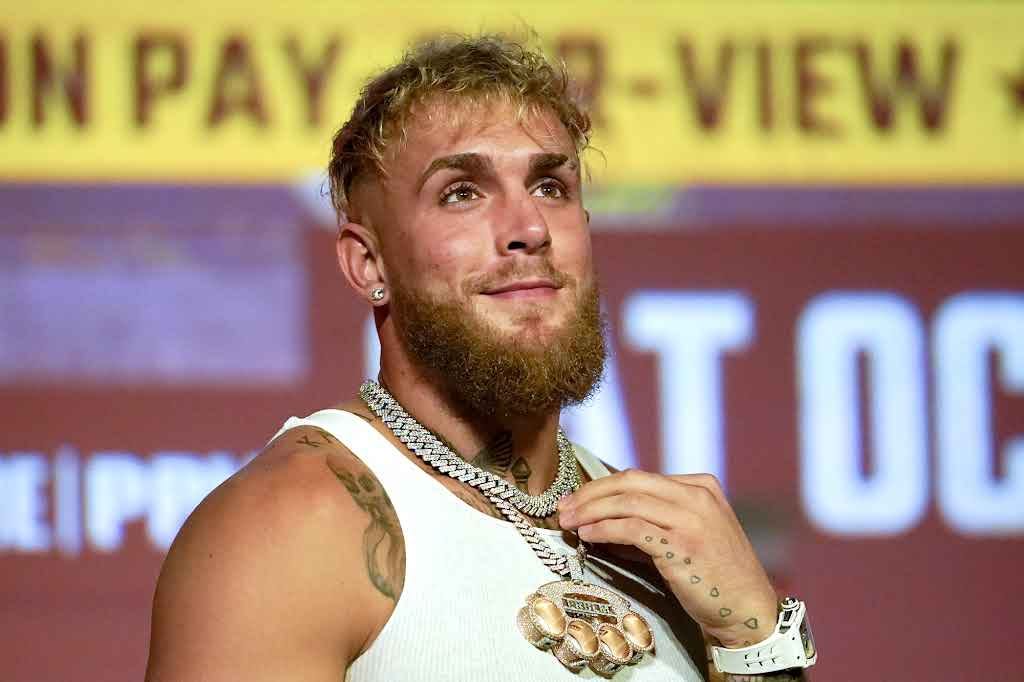
Whether you love him or hate him, you’ve got to respect one thing: he knows how to turn attention into cash.
According to multiple sources, the total purse for Jake Paul vs. Anthony Joshua over the weekend was reported at around $184 million. If split evenly, that would mean roughly $92 million for each fighter before bonuses, sponsorships, and streaming shares.
Paul himself even hinted the figure could be much higher, claiming on social media that the event was worth as much as $267 million, potentially pushing his individual takeaway toward the $100 million+ mark once Netflix and promotional revenue shares are included.
Let that sink in for a second.
A YouTuber who started making Vine videos in his parents’ house in Ohio just walked away with more money from a single weekend than most Fortune 500 CEOs make in a decade.
..and the boxing money is just the tip of the iceberg.
Whilst everyone was focused on whether Jake could actually fight, he quietly built one of the most successful venture capital portfolios of any celebrity of his generation.
The same guy everyone mocked as Logan Paul’s annoying little brother? He’s sitting on a venture portfolio that could be worth $500 million. Maybe more.
Let me show you how a YouTube prankster turned internet villain became one of the most successful creator-capitalists alive
The Portfolio That Shouldn’t Exist (But Does)
Whilst you were watching Jake fight retired MMA fighters and laughing at his YouTube antics, he was writing seed checks into companies that would become worth billions.
Anti Fund’s Portfolio:
Ramp: Invested at $25M valuation, now worth $32 billion
Chronosphere: Acquired by Palo Alto Networks for $3.35 billion (EXITED)
Cognition.ai: Went from $2B to $10B+ valuation in under 2 years
Anduril: Climbed from $8.5B to $30B+ valuation
Olipop: Jumped from $200M to $1.85B valuation
OpenAI: Yes, that OpenAI. The ChatGPT one.
Polymarket: The prediction market that called the 2024 election
If Jake invested just $100K in Ramp at seed stage, that stake alone would be worth $100 million+ today. If he put in $500K? We’re talking half a billion dollars from one investment.
This is the same guy everyone dismissed as a clown. The same guy traditional media mocked. The same guy boxing purists hate. The same guy your parents think is “what’s wrong with young people today.”
Jake Paul’s current empire:
Net worth: ~$200-400M (and climbing fast)
Boxing earnings: $150M+ since 2020
Anti Fund AUM: $65M+
Most Valuable Promotions: Netflix’s go-to boxing partner
W Body Care: $150M valuation in 6 months
He’s not Logan’s little brother anymore. He’s arguably the most successful creator-turned-investor of his generation.
And the $92-100M he just made from the Joshua fight? That’s not even his biggest payday this year when you factor in his venture gains.
How a Vine Clown Became a Venture Capitalist
Let’s rewind. Because the Jake Paul story doesn’t start with boxing or venture capital.
It starts in Westlake, Ohio, in 1997.
1997-2013: The Setup
Born January 17, 1997. Middle-class family. Older brother Logan starts making videos. Jake follows. Classic younger sibling dynamic except these siblings would both become worth nine figures.
2013-2017: The Vine Era
Jake hits Vine and explodes:
5.5 million followers
2 billion views before Vine shuts down
Lands Disney Channel’s “Bizaardvark”
Creates the catchphrase “It’s Everyday Bro”
Gets his first taste of real money
Most people his age were applying to college. Jake was making six figures from 6-second videos.
2017-2020: The YouTube Villain Arc
This is where Jake became JAKE PAUL.
The controversies. The pranks. The neighbors suing him. The Team 1000 house burning through money. Getting fired from Disney. Everyone thought he was an idiot destroying his career.
He was studying the attention economy. Learning that controversy = views = leverage = money.
Whilst traditional media was writing think pieces about “influencer culture destroying society,” Jake was figuring out how to weaponize attention into capital.
2020-2021: The Boxing Pivot
First fight vs AnEsonGib: $1.2M
By 2021: $45 million from three boxing bouts
The formula was simple:
Fight non-boxers (ex-NBA players, retired MMA fighters)
Generate massive controversy
Cash massive checks
Repeat
Critics said he was ducking real boxers. Jake said he was building a business. Turns out, he was right.
2021-2025: The Business Empire
In 2021, Jake founded Most Valuable Promotions (MVP), a boxing promotion company alongside his adviser Nakisa Bidarian.
Same year, he founded Anti Fund, a venture capital firm with Geoffrey Woo (Stanford CS grad, serial entrepreneur).
This is where Jake Paul stops being a YouTuber who boxes and becomes something entirely different, a creator-capitalist building a billion-dollar empire across multiple industries.
Anti Fund: The Venture Firm That Shouldn’t Work (But Absolutely Does)
Let’s talk about what might be Jake’s most impressive move: convincing some of the smartest investors in Silicon Valley to let a YouTube prankster manage their money.
The Founding Thesis
Anti Fund concentrates its investments in artificial intelligence and robotics. But here’s the real thesis: “Capital is a commodity. Attention is not.”
Every VC can write a check. Anti Fund can write a check AND make your company famous overnight.
In a world where customer acquisition costs are skyrocketing and paid ads are getting less effective, that’s worth more than a higher valuation.
The Structure
Anti Fund closed its oversubscribed $30 million Fund I, bringing total AUM to more than $65 million.
Leadership:
Jake Paul: GP, Co-founder
Geoffrey Woo: GP, Co-founder
Logan Paul: GP (joined December 2025)
Steve Han: Partner
LPs Include:
Marc Andreessen and Chris Dixon (a16z founders)
Aquarian Holdings
Autilus Partners
When the smartest money in Silicon Valley bets on you, you’re not a celebrity vanity project anymore.
The Barbell Strategy
Anti Fund uses what they call an “extreme barbell strategy”:
Tiny checks ($100-500K) for huge ownership (10%) in technical founders nobody’s heard of
Massive checks ($10M+) into proven winners with massive traction
No middle ground. No “safe” Series B checks into decent companies.
It’s extreme high-risk, extreme high-reward at both ends.
Why This Works
Traditional VCs offer:
Money
Network
Maybe some advice
Anti Fund offers:
Money
Network
50M+ combined subscribers across Jake and Logan’s channels
The ability to make your boring B2B SaaS company go viral on TikTok
Cultural capital that makes nerdy tech companies cool
If you’re building an AI coding agent and nobody knows who you are, Jake can make you famous in a week.
That’s worth 5-10% lower valuation to the right founder.
Who’s Writing Them Checks
Here’s Geoffrey Woo explaining the Anti Fund thesis:
“The people that create the future are the crazy ones that believe they can do it.”
And here’s what they tell founders:
“We are young, hungry capitalists who are just getting warmed up. We love this game, and we’re committed to scaling to the very top of it.”
Most VCs sound like McKinsey consultants. Anti Fund sounds like founders. Because they are.
Most Valuable Promotions: Disrupting Boxing From the Inside
Now let’s talk about how Jake is literally changing boxing whether the old guard likes it or not.
The Problem Jake Identified
Traditional boxing in 2020:
Old-school promoters (Don King, Bob Arum) controlling everything
Fighters getting 20-30% of total revenue
Zero social media strategy
Dying fanbase (average age: 50+)
PPV model broken (who’s paying $80 for a fight?)
Jake looked at this and said: “This entire industry is ripe for disruption.”
The MVP Solution
Most Valuable Promotions, established in 2021 by Jake Paul and his adviser Nakisa Bidarian, flipped the entire model:
1. Sign Real Fighters
First signing: Amanda Serrano, Puerto Rican boxer and seven-division world champion.
Why would an elite boxer sign with a YouTuber’s promotion company?
Because Jake paid her more than she made in her entire previous career.
2. Create Events, Not Just Fights
Every MVP card isn’t just a boxing match it’s a content factory.
Pre-fight content, behind-the-scenes docs, social media campaigns, celebrity appearances. The fight is the finale, not the whole show.
3. Netflix Over PPV
This was genius.
Instead of charging $80 PPV and getting 500K buys, Jake partnered with Netflix to stream fights for free to 280M+ subscribers globally.
Lower per-fight revenue, but:
Massive reach
Younger audience
Recurring partnership
Fighters get exposure worth more than PPV points
4. Pay Fighters What They’re Worth
Amanda Serrano made more fighting Katie Taylor under MVP than her entire previous career combined.
When fighters see that, every young boxer starts asking: “Why am I not with MVP?”
The Numbers That Prove It Works
Katie Taylor vs. Amanda Serrano (2022)
First women’s boxing match to headline Madison Square Garden
Called “biggest women’s fight of all time”
Won Fight of the Year awards
Proved women’s boxing could draw massive audiences
Jake Paul vs. Mike Tyson (2024)
108 million viewers tuned in on Netflix
Jake earned $40M
Biggest boxing event of 2024
Most-streamed sporting event in Netflix history
Jake Paul vs. Anthony Joshua (2025)
Reported $184M total purse
Jake’s split: ~$92-100M
Likely the highest single-fight payday of 2025
Why Traditional Boxing Is Terrified. MVP doesn’t need boxing. Boxing needs MVP.
They have:
The young audience (Jake’s fans are 18-35)
The streaming deals (Netflix partnership)
The social distribution (50M+ followers)
Better fighter compensation
Every fighter under 30 is watching this and thinking: “Why am I giving 70% to a promoter when MVP gives me 60%?”
MVP is to boxing what UFC was to fighting in 2005. And traditional promoters are about to get Blockbustered.
The Operating Empire: W Body Care, Betr, and YouTube
Boxing and venture capital are sexy. But Jake’s building boring, profitable operating businesses too.
W Body Care: The $150M Speedrun
This might be the most impressive thing Jake’s done:
Launched: June 2024
Series A: July 2024 ($11M raised)
Valuation: $150 million
Time to $150M valuation: One month.
Read that again. Jake launched a deodorant brand and it hit $150M valuation in 30 days.
The Strategy:
Launch at Walmart, not DTC
Most celebrity brands launch DTC, spend millions on customer acquisition, then struggle to get into retail.
Jake skipped that entirely. Launched directly into 4,000+ Walmart stores.
Price under $8
Competitors (Native, Degree, etc.) charge $15-20.
W charges $6-8. Mass market from day one.
Target 10-30 year old males
Jake’s audience = perfect product-market fit.
20 million subscribers who trust his recommendations. Zero customer acquisition cost.
The Results:
W has broken out in Walmart’s “emerging brands” category by earning seven-figures in sales in the first months.
Projected Year 1: $50M+ in sales
Investors:
Shrug Capital (lead)
Anti Fund
Paris Hilton
Naomi Osaka
Michael Rubin (Fanatics CEO)
Celsius CEO
This isn’t a celebrity slapping their name on deodorant made by a white-label manufacturer.
This is Jake building a CPG empire that could sell to Procter & Gamble for $1B+ in 3-5 years.
Betr: The Sports Betting Play
In August 2022, Paul founded Betr, a sports-media and mobile-betting company alongside Simplebet founder Joey Levy.
The Numbers:
Raised $100M total funding
$375M valuation (2024)
Operating in 24 states
Pioneering “micro-betting” (bet on individual plays, not just games)
Jake owns significant equity. Another potential billion-dollar exit.
The YouTube Machine (Still Printing Money)
Everyone forgets Jake still runs one of the biggest YouTube channels in the world:
20M+ subscribers
7.7 billion total views
$9-10M annual revenue (conservative estimate)
Zero marginal cost to maintain
It’s the cash cow funding everything else and he barely even posts anymore.
The Money: Where Jake’s $200-400M Net Worth Actually Comes From
Let’s break down how a 28-year-old YouTuber is worth a quarter-billion dollars minimum:
Boxing: The Cash Engine
“I’ve roughly been averaging around $40 million a year for the past four years in boxing.” Jake Paul
Biggest Paydays:
Mike Tyson (2024): $40M
Anthony Joshua (2025): $92-100M
Tommy Fury (2023): $8M
Nate Diaz (2023): $10M
Anderson Silva (2022): $10M
Tyron Woodley fights (2021): $25M combined
Total boxing earnings since 2020: $150M+
Venture Capital: The Wealth Multiplier
This is where it gets interesting. Most of Jake’s wealth is paper gains, but the numbers are staggering:
Conservative portfolio estimates:
Ramp stake: $100-500M (depending on entry point and ownership %)
Chronosphere exit: $33M+ (confirmed exit)
Anduril stake: $36M+
Cognition stake: $25M+
Olipop stake: $20M+
Other positions: $50M+
Total VC portfolio value: $200-700M (paper)
The range is wide because:
We don’t know exact ownership percentages
Most positions are illiquid
Valuations fluctuate
But even the conservative estimate makes his VC portfolio worth more than his boxing career.
Operating Companies:
W Body Care equity: ~$75M (assuming 50% ownership at $150M valuation)
Betr equity: ~$50M (estimated based on ownership %)
MVP equity: $50M+ (estimated based on Netflix deal and revenue)
Content & Other:
YouTube/Social media: $10M/year
Sponsorships: $5-10M/year
Real estate: $50M+ (multiple properties)
Total Net Worth Range: $200-400M
The range is wide because most wealth is illiquid. But even the conservative $200M estimate makes him one of the richest creators ever.
For context:
MrBeast: ~$500M
Logan Paul: ~$150M (excluding Prime)
KSI: ~$100M
Jake’s quietly built a portfolio that might eclipse all of them except MrBeast.
The 10 Lessons From Jake’s Playbook
Let’s break down what actually transfers from Jake’s strategy to anyone building a business:
1. Controversy Is Currency (If You Can Convert It)
Jake weaponised hate into attention, then attention into money.
Most influencers get attention and blow it on cars and jewelry. Jake turned it into equity in billion-dollar companies.
2. The Barbell Strategy Works Everywhere
Anti Fund’s investment strategy mirrors Jake’s entire career:
Go extremely high-risk OR extremely safe. No middle ground.
YouTube pranks (high-risk) + Disney Channel (safe)
Fighting non-boxers (high-risk) + Building promotion company (safe)
Seed-stage AI startups (high-risk) + Growth investments in Anduril (safe)
The middle is where you get killed. The extremes compound.
3. Own The Whole Stack
Jake doesn’t just box he owns the promotion, the streaming deal, the marketing, the entire value chain.
Maximum value capture.
Most fighters make 20% of total event revenue. Jake makes 60-70% because he owns the promotion.
4. Distribution > Product
W Body Care isn’t revolutionary deodorant. The formulation is fine, not amazing.
But Jake’s distribution made it worth $150M in 30 days.
Distribution beats product every single time.
5. Smart Money Follows Rebels
Marc Andreessen and Chris Dixon are LPs in Anti Fund.
The smartest investors in the world are betting on the guy everyone else mocks.
Why? Because they understand: The best founders are rebels. And Jake is the ultimate rebel.
6. Speed Beats Strategy
Jake moves faster than everyone:
W Body Care to $150M in one month
Anti Fund closing deals whilst traditional VCs are still doing diligence
Boxing matches announced and executed in 90 days
Speed creates unfair advantages.
7. Brothers > Partners
Logan joining Anti Fund as GP in December 2025 was strategic.
Family businesses have aligned incentives forever. No vesting cliffs, no co-founder breakups.
Jake and Logan might fight, but they’ll never screw each other over.
8. Pick Growing Markets
Jake only plays in markets growing 20%+ annually:
AI (50%+ annual growth)
Defense tech (30%+ growth)
Creator economy (25%+ growth)
Sports betting (20%+ growth)
Rising tides lift all boats. Jake only sails in hurricanes.
9. Attention Compounds
Every business Jake builds gets free marketing from his 20M YouTube subscribers.
That compounds into permanently lower customer acquisition costs.
W Body Care’s CAC is probably $2. Competitors pay $50.
That 25x advantage compounds forever.
10. They’ll Hate Until They Can’t
Everyone mocked Jake until his checks started clearing.
Now? “Anti Fund has embedded ourselves in the nests and communities of the boldest founders shaping society.”
Haters become copycats. Every time.
Is Jake Actually Smart Or Just Lucky?
The portfolio says smart.
You don’t accidentally invest in OpenAI, Ramp, Anduril, and Cognition. That’s not luck that’s either:
Jake has great deal flow and investment intuition, OR
Geoffrey Woo is brilliant and Jake’s the marketing arm
Probably both. But either way, the results speak for themselves.
Plus: Stanford CS grads don’t partner with idiots. Marc Andreessen doesn’t write LP checks to lucky fools.
Could This All Collapse?
Yes. Absolutely.
Most of Jake’s wealth is paper gains. If tech crashes, his portfolio craters. If he loses badly in boxing (gets knocked out by a real boxer), that income stops. If controversies catch up (which they haven’t yet), sponsors flee.
But Jake has diversified across:
Public income (boxing)
Private equity (venture)
Operating companies (W, Betr, MVP)
Passive income (YouTube)
That’s harder to kill than it looks.
Is This Replicable?
No and yes.
No: You probably can’t become Jake Paul. You don’t have 20M YouTube subscribers. You can’t fight on Netflix. You can’t get Marc Andreessen’s cell number.
Yes: The principles absolutely work:
Build audience first (even if it’s 10K, not 10M)
Convert attention to equity (every brand wants distribution)
Partner with technical talent (you don’t need to be the expert)
Move faster than institutions (speed is advantage)
Embrace being hated (controversy = attention)
The playbook scales down. You just need to execute it.
The Final Reality: What Jake Paul Actually Represents
Jake Paul isn’t just a YouTuber who boxes and invests. He represents something bigger:
The creator economy’s final form.
Let me show you the evolution:
Stage 1: Make content for platforms (2013-2017)
Create videos for YouTube
Platform keeps 45%, you keep 55%
Hope you get views
Stage 2: Build audience-based businesses (2017-2020)
Sell merch
Launch courses
Brand deals
Monetize the audience directly
Stage 3: Use attention as leverage for equity (2020-2023)
Start investing in companies
Trade attention/distribution for ownership
Become the capital, not just the labor
Stage 4: Become the platform (2023-2025)
Own the promotion company (MVP)
Own the VC firm (Anti Fund)
Own the consumer brand (W)
You ARE the infrastructure
Jake speedran all four stages in a decade.
Most creators never leave Stage 2. MrBeast is entering Stage 3. Jake’s already building Stage 4.
And here’s what terrifies traditional institutions:
If the playbook works for Jake, it works for every creator with 1M+ followers.
Imagine:
MrBeast launching a VC firm (he probably will)
Creators owning sports leagues
Influencers buying media companies
The power is shifting from institutions to individuals with distribution.
Jake Paul is just the first one who figured it out.
Love him or hate him, Jake Paul has done something nobody else has:
He turned being the internet’s villain into a venture capital empire that might be worth a billion dollars.
Whilst you were commenting “L + Ratio,” he was writing checks into the future.
Whilst you were making fun of his boxing, he was building the promotion company that’s disrupting the sport.
Whilst you were dismissing him as a YouTuber, he was investing in OpenAI, Anduril, and Ramp.
And that $92-100M he just made from the Joshua fight?
That’s not even his biggest win this year.
If Ramp goes public at $32B valuation, Jake’s stake could be worth more than his entire boxing career.
The scariest part?
He’s only 28 years old.
Most people his age are still trying to figure out their career. Jake’s built four of them and they’re all printing money.
“We are young, hungry capitalists who are just getting warmed up. We love this game, and we’re committed to scaling to the very top of it.” — ake Paul
The next time someone dismisses influencers as “just content creators,” show them Jake’s portfolio.
Then ask them what their favorite VC has built lately.
Keep building
David
P.S. The real story isn’t that Jake Paul made $100M in one weekend. It’s that the $100M doesn’t even move the needle on his net worth anymore. When your venture portfolio is worth $200-700M, a $100M boxing payday is just another Friday. That’s when you know you’ve actually made it.
Want to go deeper? Book office hours here - intro.co/DavidOlusegun