


Hey,
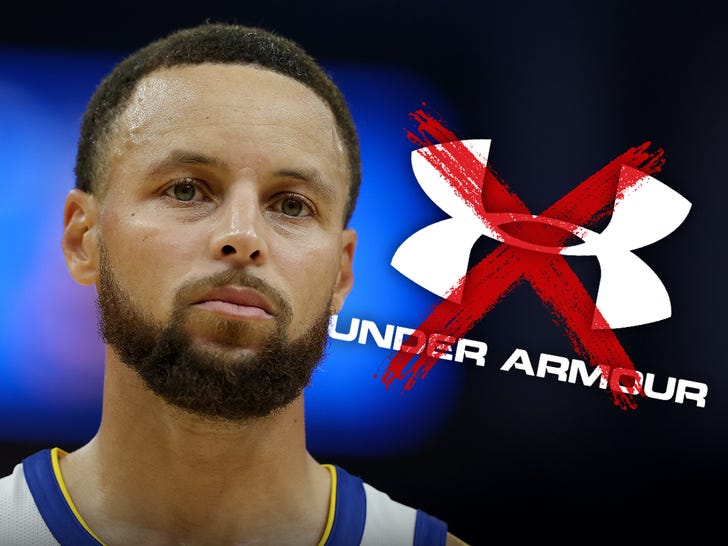
So Stephen Curry just became a free agent.
After 13 years with Under Armour, Curry and UA announced their separation, with Curry Brand becoming independent and UA focusing on what CEO Kevin Plank called the “core UA brand”
The Curry 13 drops in February 2026 as the final collaboration, then Curry’s on his own.
The question everyone’s asking: Should Curry go back to Nike? Sign with Adidas? Build Curry Brand completely independently?
The question nobody’s asking but should be: What does the data actually tell us about which path creates generational wealth?
Because here’s the thing: This isn’t just about Steph Curry’s next shoe deal. This is about whether athlete-led brands can exist independently in 2025 or whether the Nike/Adidas duopoly is the only path that works.
Let me show you what the numbers say. And trust me, the answer isn’t what most people think.
Why The Split Actually Happened (It’s Not What You Think)
The PR statements were lovely and amicable. But let’s look at what’s actually happening at Under Armour:
Under Armour announced the split alongside an expansion of its restructuring plan, now expecting it to cost £191 million, £71 million more than previously disclosed, including “the separation of the Curry Brand, additional contract terminations, impairment charges and severance costs.”
Translation: Under Armour is bleeding. And Curry was expensive.
At its peak in 2017, Under Armour’s long-term sponsorship commitments tallied £1.02 billion. That fell to £322 million in its latest SEC filing, with only £88 million due more than five years out.
UA has spent the last 7 years systematically cutting every major partnership:
Backed out of MLB jersey deal (2018)
Let NFL relationship lapse (2021)
Severed relationships with UCLA, Cal, Cincinnati
Lost Auburn, South Carolina, Texas Tech when deals expired
The pattern is clear: Under Armour is retreating from expensive athlete partnerships because they can’t make the economics work.
Under Armour’s global basketball business is projected to do about £75-90 million in revenue in fiscal 2026, which includes what will now be the last of the Curry Brand sales.
Think about that. Curry, one of the greatest basketball players ever, with four championships and global recognition generated maybe £75-90M in annual basketball revenue for UA.
That’s not a Curry problem. That’s a distribution problem.
The Jordan Blueprint Everyone References (But Nobody Understands)
Every conversation about Curry’s future mentions Jordan Brand. So let’s talk about what Jordan actually is and why it’s almost impossible to replicate.
The Jordan Numbers:
Jordan Brand hit £5.25 billion in revenue in fiscal 2024
Jordan was Nike’s strongest performer with 6% sales gain, compared to Men’s (1%), Women’s (0%) and Kids (1%)
Jordan brand revenue has doubled since 2020 as it expanded into more women’s gear, non-basketball items and international sales
Michael Jordan earns around £112 million per year from Nike (5% royalty on all Jordan sales)
MJ has made over £1.1 billion from Nike since the partnership began.
But here’s what people miss: The Jordan brand is owned by Nike, not Michael Jordan.
MJ gets 5% royalties. Nike owns everything the brand, the designs, the IP, the distribution, the manufacturing relationships.
Why this matters: Jordan Brand generates £5.25 billion because it has Nike’s global infrastructure behind it. Nike’s £35+ billion supply chain. Nike’s relationships with every major retailer globally. Nike’s marketing machine.
Michael Jordan is a billionaire (£2.25 billion net worth) not because he owns Jordan Brand, but because he gets 5% of something massive instead of 100% of something small.
That’s the fundamental trade-off Curry now faces.
The Three Paths Forward
Let me break down Curry’s options with actual analysis of what each path looks like:
Option 1: Return to Nike
The Case For:
Curry left Nike and signed with Under Armour in 2013, several years into his NBA career.
Nike has the infrastructure to take Curry Brand from £75-90M to £750M+
Jordan Brand proves Nike can make athlete sub-brands work at scale.
Nike’s global distribution (30,000+ retail doors) vs UA’s limited reach.
Nike’s digital ecosystem and SNKRS app for launches.
Existing relationships with Zion, Luka, Tatum under Jordan Brand.
The Case Against:
Nike already let Curry walk once (didn’t offer him a signature line in 2013).
Would Curry Brand exist as independent entity or just become another Nike athlete line?
Nike takes majority ownership and control
Curry likely gets 5-10% royalties, not ownership
Creative control heavily restricted
Realistic Financial Outcome:
Nike could scale Curry Brand to £450-750M annual revenue
Curry gets 5-7% royalty = £22-52M annually
No ownership, limited control, but massive scale
Option 2: Partner With Adidas or Puma
The Case For:
Adidas/Puma would give Curry more control than Nike
Desperate for a basketball star (Adidas lost Kanye, needs basketball credibility)
Could structure deal with higher royalties (10-15%)
Better creative control and brand independence
The Case Against:
Neither has Nike’s distribution power
Adidas basketball has been struggling for years
Puma’s basketball credibility is weak despite Jay-Z partnership
Less infrastructure to scale Curry Brand globally
Realistic Financial Outcome:
Adidas/Puma could scale Curry Brand to £225-375M revenue
Curry gets 10-15% = £22-56M annually
More control, less scale
Option 3: Build Curry Brand Independently
This is the path everyone’s talking about but nobody’s actually analysed properly. So let’s do it.
The Independent Athlete Brand Model: Does It Actually Work?
To answer whether Curry should go independent, we need to look at what “independent” actually means for athlete brands.
The Hard Truth: There are essentially ZERO truly independent athlete footwear brands operating at scale.
Let me show you why.
What Independent Requires:
1. Manufacturing Partnerships You don’t own factories. You contract with manufacturers (mostly in Asia). These manufacturers have minimum order quantities, usually 50,000-100,000 units per style.
Cost: £7.5-15M minimum order commitments per quarter
2. Distribution You need to get into retail. Foot Locker, Finish Line, Champs, Dick’s Sporting Goods, plus international.
Without a major brand backing, you’re not getting prime shelf space. You’re fighting for every door.
Cost: Sales team, trade marketing, retail support = £3-7.5M annually
3. Marketing Curry has personal brand power, but converting that to shoe sales requires consistent marketing spend.
Cost: £15-30M annually minimum (Nike spends £150-225M+ on Jordan Brand marketing)
4. Operations Design team, product development, quality control, logistics, customer service, e-commerce platform, warehousing.
Cost: £7.5-15M annually
5. Working Capital You have to pay manufacturers 60-90 days before product hits shelves. Retailers pay you 60-90 days after it sells.
Cost: £15-37.5M in working capital needed
Total First-Year Investment: £52.5-105M+
And that gets you to maybe £75-150M in revenue if you’re successful.
The Financial Reality Check
Let’s model what independent actually looks like for Curry Brand:
Scenario: Curry Brand Goes Fully Independent
Year 1 Revenue: £75M (matching current UA run rate) Gross Margin: 45% (£33.75M)
Costs:
Manufacturing/COGS: £37.5M
Marketing: £18.75M
Operations: £11.25M
Distribution/Sales: £7.5M
Total Costs: £75M
Operating Income: -£3.75M (loss)
Required Investment: £22.5M+ in working capital
Year 3 Revenue (if successful): £150M Gross Margin: 48% (£72M)
Costs:
COGS: £75M
Marketing: £30M
Operations: £15M
Distribution: £11.25M
Total: £131.25M
Operating Income: £18.75M (25% margin)
But here’s the problem: To get from £75M to £150M, you need to invest heavily in marketing and distribution. You need £30-45M in capital over 3 years to fund growth.
And even at £150M revenue with 25% operating margin, Curry makes £37.5M annually.
Compare that to the Nike option where Curry makes £22-52M in royalties with ZERO capital risk or operational burden.
The independent path only makes sense if you can scale past £375-525M revenue.
Why The Jordan Model Can’t Be Replicated
Everyone says “Just do what Jordan did!”
Let’s be clear about what Jordan actually did:
1. Jordan Didn’t Go Independent
Jordan Brand is owned by Nike and operates as a subsidiary. It’s not independent, it’s Nike with Jordan’s name.
2. Jordan Had Perfect Timing
Launched in 1984 when:
Basketball sneaker market was nascent
No social media meant word-of-mouth was king
Nike was still building its empire
Competition was mainly Adidas and Converse
Today:
Market is saturated
Social media changes everything (good and bad)
Nike is a £38B gorilla that owns distribution
Competition is fierce across price points
3. Jordan Had 40 Years
Jordan brand revenue has doubled since 2020, but it took 36 years to get to £3.75B, then grew to £5.25B.
Curry is 36 years old. He doesn’t have 40 years to build.
The Case for Partnership (And Why It’s Stronger Than You Think)
Here’s my contrarian take: Curry should partner, not go independent. But NOT with Nike.
The Optimal Play: Strategic Partnership with Private Equity Backing
Hear me out.
Instead of Nike/Adidas OR fully independent, there’s a third path:
Structure:
Curry owns 60-70% of Curry Brand
Private equity partner owns 30-40% (Provides £75-150M capital)
Manufacturing partnership with major factory (not Nike/Adidas)
Distribution partnership with retailers (Curry Brand as independent entity)
PE partner provides operational infrastructure
Why This Works:
1. Curry Maintains Control 60-70% ownership means he makes all strategic decisions
2. Access to Capital Without Debt £75-150M from PE partner funds 3-5 year growth plan
3. Infrastructure Support PE partner (like The Brand Company, Authentic Brands Group, or Consortium) provides:
Manufacturing relationships
Supply chain expertise
Retail distribution negotiations
Operational best practices
4. Realistic Path to £375-525M Revenue With proper capital and infrastructure, Curry Brand could realistically hit £375-525M in 5-7 years.
At £375M revenue with 30% operating margin = £112.5M EBITDA Curry’s 65% stake in £112.5M EBITDA business = £73M annual income
Plus potential £1.5-2.25B exit valuation (4-6x revenue for profitable athletic brand) Curry’s 65% = £975M-1.46B exit value
That’s generational wealth AND control.
What The Smart Money Would Do
If I were advising Curry, here’s the play:
Phase 1 (Months 1-6): Independent Testing
Launch Curry Brand independently with limited product line
2-3 hero products direct-to-consumer
Use Curry’s platform to drive organic demand
Goal: Prove £37.5-75M DTC revenue possible with minimal marketing spend
Investment: £15-22.5M (mostly inventory)
Phase 2 (Months 6-12): Strategic Partnership
With proof of concept, negotiate PE partnership
Curry maintains 60-70% ownership
PE provides £75-150M for scale
Bring in experienced CEO (someone who’s built £225-375M+ athletic brand)
Phase 3 (Years 1-3): Scale Through Distribution
Build wholesale partnerships (not exclusive to any retailer)
Expand product line strategically (don’t try to compete across all categories)
Invest heavily in community/grassroots (Curry’s authentic strength)
Focus on performance basketball first, lifestyle second
Phase 4 (Years 3-5): Demonstrate Sustainable Model
Target £375-525M revenue
25-30% operating margins
Proof that athlete-owned brands can exist at scale
Position for potential public offering or strategic sale
Exit Options at Year 5:
Take public (£1.5-2.25B valuation, Curry keeps majority stake)
Sell to strategic (Nike/Adidas pay £1.875-2.625B for established brand)
Sell to PE (Larger PE firm pays £1.5-2.25B, Curry fully exits)
Keep building (If hitting targets, why sell?)
The Numbers That Change Everything
Let me show you the wealth creation comparison:
Option 1: Nike Partnership (5% Royalty)
Year 1-10: £22-52M annually = £375M total
No ownership
Net worth impact: +£375M
Option 2: Fully Independent
Investment required: £52.5-105M+ over 3 years
Best case £150M revenue, 25% margin = £37.5M annual income
100% ownership but capped scale
Realistic exit: £525-825M at 3.5-5.5x revenue
Net worth impact: +£337.5-577.5M (after initial investment)
Option 3: PE Partnership (65% Ownership)
Investment from PE: £75-150M (Curry invests minimal capital)
Target £375-525M revenue, 30% margin in Year 5
Curry’s 65% of £112.5M EBITDA = £73M annual income
Exit valuation: £1.5-2.25B
Curry’s 65%: £975M-1.46B
Net worth impact: +£1.31-1.72B over 5 years
The PE partnership path creates 3-4x more wealth than Nike royalties and 2-3x more than fully independent.
Plus Curry maintains control and builds actual enterprise value.
Why This Matters Beyond Curry
If Curry pulls this off builds a £375-525M independent athlete brand with PE backing it changes everything for athlete business models.
It proves:
Athletes don’t need Nike/Adidas oligopoly
PE capital + athlete brand = viable model
Ownership + scale is achievable
That opens doors for:
LeBron to do this with his brand
Current stars to structure deals differently
Retired legends to revive their brands independently
But if Curry goes back to Nike for royalties, it reinforces: The system works. Athletes need the big brands. Going independent is too risky.
My Verdict
Curry should NOT go back to Nike.
Curry should NOT go fully independent.
Curry SHOULD find a strategic PE partner, maintain 60-70% ownership, use their capital and infrastructure to scale Curry Brand to £375-525M revenue, then exit at £1.5-2.25B valuation or keep building.
Why I’m confident: Curry has three massive advantages:
Proven Brand - Curry Brand already exists and has credibility
Community Credibility - His grassroots focus is genuine and sustainable
Perfect Timing - Consumers want alternatives to Nike/Adidas duopoly
Plus Under Armour just proved the floor: even with terrible distribution and declining UA brand, Curry drove £75-90M in basketball revenue.
Give him proper infrastructure and capital, and £375-525M is absolutely achievable.
That’s a £975M-1.46B exit for Curry in 5-7 years. Versus £375M in Nike royalties over 10 years.
The choice is obvious.
Your Takeaway
The question isn’t whether athletes can build independent brands.
The question is: Can athletes access the capital and infrastructure needed to scale them?
For Curry, the answer is yes, IF he structures it right.
60-70% ownership + PE partner + experienced operators + Curry’s brand equity = Generational wealth AND control.
That’s the blueprint.
Now we’ll see if he has the vision to execute it.
What would you do with £1.46B and full control versus £375M and zero control?
Keep building,
David
P.S. Michael Jordan makes £112M annually from Nike for 5% of Jordan Brand. If MJ had owned 65% instead, he’d be making £1.36B annually from a £5.25B revenue brand. Sometimes the difference between generational wealth and dynasty wealth is just the deal structure you negotiate at the beginning.
Want to go deeper? Book office hours here - intro.co/DavidOlusegun