


Hey
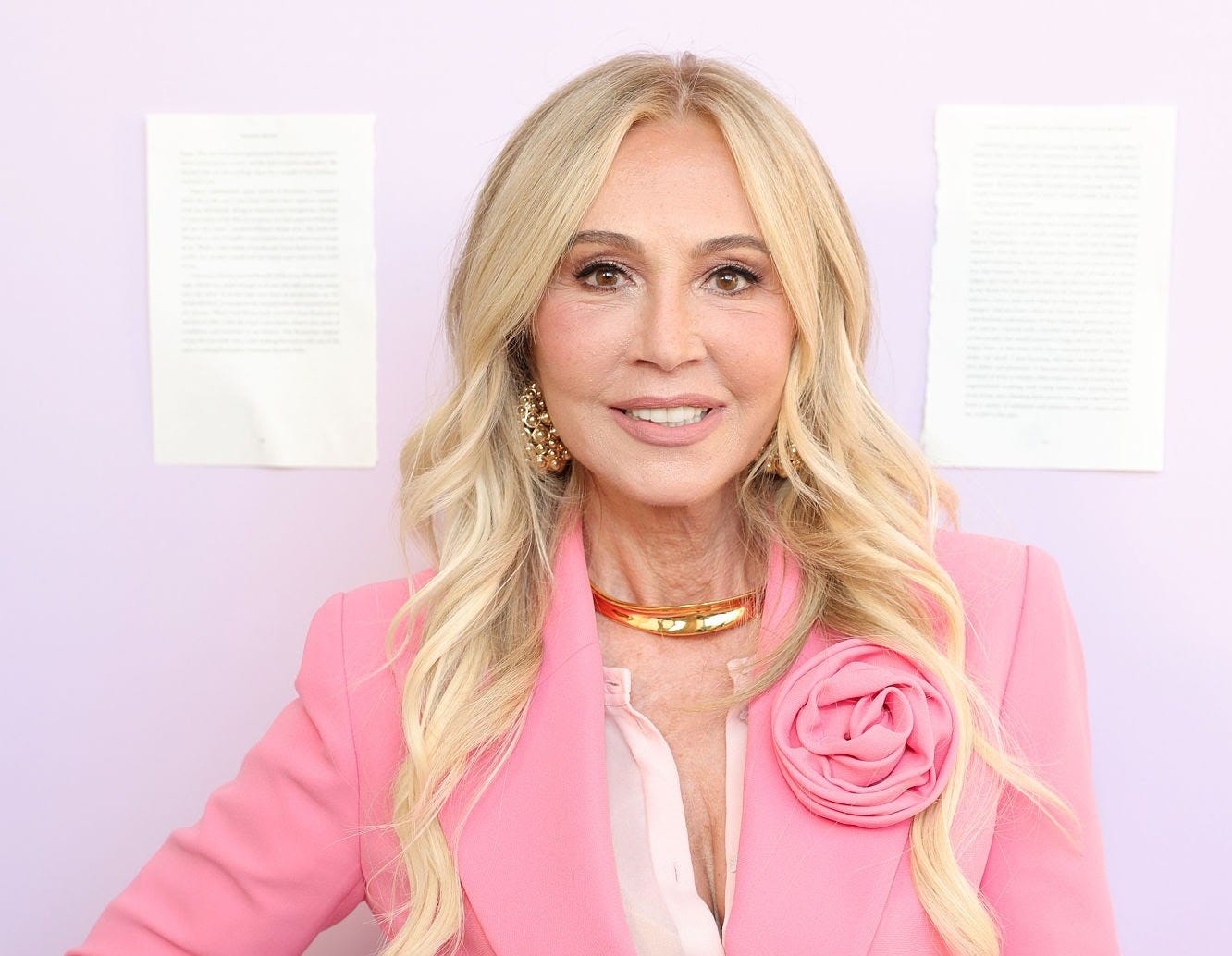
So whilst everyone was focused on holiday shopping and year-end deals, Anastasia Soare the woman who built eyebrows into a billion-dollar business just put $225 million of her own money back into Anastasia Beverly Hills to effectively kick out TPG, one of the world’s most powerful private equity firms.
Here’s what actually happened:
2018: TPG invested ~$600M at a $3B valuation for 38% stake
2025: Revenue declined, debt piled up, S&P downgraded the company to “D” rating
2026: Through debt restructuring, TPG’s stake got diluted from 38% → ~6%
Now: Anastasia puts in $225M to recapitalize and restore full control
Translation: TPG put in $600M and is walking away with maybe $50-100M after 8 years. That’s a $500M+ loss on what was supposed to be a “safe” consumer brand investment.
Meanwhile, Anastasia took $600M out in 2018, kept $375M after taxes, put $225M back in 2026, and now owns her company debt-free with full control.
Net position: +$150M cash plus complete ownership of a $600-800M company.
We’re about to see this happen over and over again across consumer brands. The 2020-2022 PE deals are breaking. Founders are learning. And the smart ones are doing exactly what Anastasia just did.
Let me show you how she pulled this off
The Deal That Looked Great (Until It Didn’t)
Let’s rewind to 2018.
Anastasia Beverly Hills in 2018:
Revenue: ~$500-600M annually
EBITDA: ~$110M (20% margins, solid for beauty)
Founded: 1997 by Anastasia Soare, a Romanian immigrant who started doing eyebrows in a Beverly Hills salon
Known for: Pioneering the “Instagram brow” and building a cult following
Valuation: $3 billion
TPG came knocking with a deal:
The Offer:
$600M investment for 38% minority stake
Anastasia keeps 62% and remains CEO
TPG brings “operational expertise” and “institutional infrastructure”
Target: Scale from $600M to $1B+ revenue in 5 years
Exit: IPO or strategic sale at $5-7B valuation by 2023-2024
On paper, this looked brilliant:
For TPG:
$600M investment at $3B valuation
Target 2-3x return in 5-7 years
Total return: $1.2-1.8B
For Anastasia:
$600M in personal liquidity (life-changing money)
Keeps majority control
Gets “sophisticated” PE backing to scale
Her 62% stake worth ~$3-4.5B at exit
Everyone wins, right? Wrong.
Because what TPG actually did was classic private equity playbook and it destroyed the business.
What Private Equity Actually Does
Here’s what happened after TPG invested:
Year 1 (2019): The “Professionalization”
TPG brings in traditional beauty executives from L’Oréal, Estée Lauder, P&G. Standard PE move.
Changes implemented:
Expand SKU count by 40% (”cover more price points”)
Push into new categories (skincare, fragrance)
Expand distribution (Ulta, Target, international)
“Professionalize” operations (add layers of management)
Implement “best practices” from other beauty brands
On paper: Looks smart. More products, more channels, more markets.
In reality: Dilutes the brand. ABH was cool because it was focused. Now it’s everywhere.
Year 2 (2020): The Leverage
To boost returns, TPG adds debt to the balance sheet. This is standard PE practice use cheap debt to amplify equity returns.
The structure:
Add $300-400M in debt
Use proceeds to pay dividend to shareholders (including TPG)
Juice equity returns through leverage
The logic: If company is worth $3B and grows to $5B, equity returns look better with debt magnifying gains.
The risk: If revenue declines even 20%, debt service becomes unsustainable.
Year 3-4 (2021-2022): The Slowdown
Revenue peaks around $600M, then starts declining:
Why?
Brand dilution: ABH went from “cool Instagram brand” to “available everywhere brand”
Competition: Every beauty brand copied the inclusive shade range
Category maturation: The “Instagram brow” trend peaked
Over-expansion: Too many SKUs, too many channels, lost focus
Founder marginalization: Anastasia’s creative vision got “committee’d” to death
Revenue trajectory:
2018: $550M
2019: $600M (peak)
2020: $580M
2021: $520M
2022: $480M
2023: $450M
2024: $420M
The debt problem:
With $400M debt at 8% interest = $32M annual debt service
At $600M revenue:
EBITDA: $110M
Debt service: $32M (29% of EBITDA)
Manageable
At $450M revenue:
EBITDA: $70M
Debt service: still $32M (46% of EBITDA)
Unsustainable
Year 5-6 (2023-2024): The Crisis
By 2024, ABH is in real trouble:
Revenue still declining
Can’t service debt
Misses interest payment
S&P downgrades to “D” rating
TPG’s stake underwater
No IPO window (market crashed)
No strategic buyers (everyone’s pulling back)
TPG’s options:
Put more money in (throwing good money after bad)
Force sale (no buyers at acceptable price)
Debt restructuring (dilutes equity to nearly zero)
They chose option 3.
Year 7 (2025): The Restructuring
When companies miss debt payments, creditors force restructuring. Here’s what happened:
Before:
Enterprise value: $1B (down from $3B)
Debt: $400M
Equity value: $600M
TPG stake: 38% of $600M = $228M
Anastasia stake: 62% of $600M = $372M
After debt-to-equity conversion:
Creditors convert $300M debt to equity
TPG gets diluted from 38% → ~6%
Anastasia gets diluted but remains majority (~55%)
New equity value: ~$600M total
TPG stake: 6% of $600M = $36M (down from $600M investment)
This is where Anastasia saw her opening.
The $225M Counterstrike
With TPG diluted to nearly nothing and the company stabilized (but still over-leveraged), Anastasia made her move.
She wrote a $225M check to:
Pay down remaining debt: ~$120M
Buy out TPG’s 6% stake: ~$40M
Buy out other minority investors: ~$25M
Working capital for restart: ~$40M
The new structure:
Debt: $100M (manageable)
Anastasia ownership: ~85%
TPG ownership: ~0%
Company value: $600-800M
Clean balance sheet
Anastasia’s math:
2018 position:
Sold 38% for $600M cash
After tax: ~$375M
Kept 62% of $3B = $1.86B paper value
2026 position:
Invested $225M back in
Now owns ~85% of company
Company worth $600-800M
Her stake: $510-680M
Net cash extracted: $150M ($375M out - $225M in)
Plus: Full control of debt-free company doing $400M+ revenue
TPG’s math:
2018 position:
Invested $600M
Got 38% stake
Expected 2-3x return = $1.2-1.8B
2026 position:
Stake diluted to 6%, then bought out for ~$40M
Total return: ~$40M
Loss: $560M (93% loss on investment)
Why This Worked (The Five Strategic Moves)
Let me break down exactly what Anastasia did right because this is replicable:
Move 1: She Never Gave Up Control
In 2018, Anastasia could have:
Sold majority stake (51%+) for $800M+ cash
Given up board control for higher valuation
Let TPG run the company
She didn’t. She sold minority stake (38%), kept 62%, maintained board control.
When revenue declined and TPG wanted to:
Replace her as CEO
Sell the company to strategic
Make drastic cuts
She could say no. Because she controlled the board.
Control = Patience = Leverage
Move 2: She Kept the Sale Proceeds Liquid
Most founders who sell to PE blow the money:
$50M house
$20M art collection
$30M in “angel investments” that all fail
$100M in lifestyle creep
Anastasia did the opposite:
She took the $375M (after tax) and invested conservatively:
Real estate (boring, but appreciates)
Index funds (boring, but liquid)
Treasury bonds (very boring, but safe)
Small business investments (calculated, not splashy)
Eight years later, she had $225M+ ready when opportunity struck.
Move 3: She Let Them Fail Publicly
When TPG wanted to expand into 47 new SKUs, Anastasia could have fought it. She didn’t.
She let them try their “sophisticated retail strategies.” She let them bring in their L’Oréal executives. She let them add leverage.
Why?
Because she knew their playbook wouldn’t work for ABH. But TPG needed to fail publicly before creditors would force restructuring.
If she’d fought every decision, she’d have been blamed for the failure.
Strategic patience.
Move 4: She Maintained Relationships
Whilst TPG was bringing in new executives and “professionalizing” operations, Anastasia quietly maintained relationships with:
The original ABH team (who hated the new management)
Key retail partners (who wanted the old ABH back)
The creative community (who felt abandoned)
The core customers (who missed the focused brand)
When the restructuring happened and Anastasia bought back control, she had:
Team ready to return
Retail partners willing to refocus distribution
Community ready to re-engage
Customers ready to come back
She never burned bridges. She just waited.
Move 5: She Bought When Everyone Else Was Selling
In 2018, ABH was “worth” $3B. Every PE firm wanted in.
In 2025, ABH was rated “D” by S&P. Nobody wanted it.
Anastasia bought at “D” rating.
Warren Buffett: “Be fearful when others are greedy, and greedy when others are fearful.”
Anastasia’s version: “Be patient when PE is confident, and strike when PE is desperate.”
When your company is distressed and PE wants out, that’s when you buy back control. Not at peak valuation. At trough valuation. That’s how you win.
The Numbers That Actually Matter
Let’s compare ABH’s performance under different ownership structures:
Pre-PE (2010-2017):
Revenue CAGR: ~35% annually
Focused product line (brow products + eyeshadow palettes)
Distribution: Selective (Sephora, own stores, high-end)
Brand perception: “Cool, exclusive, Instagram-native”
EBITDA margin: ~22%
Under PE (2018-2025):
Revenue CAGR: -5% annually (peak to trough)
Expanded product line (70+ new SKUs)
Distribution: Mass (added Ulta, Target, international)
Brand perception: “Everywhere, diluted, trying too hard”
EBITDA margin: ~15% (compressed by expansion costs + debt service)
Post-Buyback (2026+, projected):
Revenue target: Stabilize at $450M, grow to $600M by 2028
Refocus product line (kill 40% of SKUs, return to core)
Distribution: Selective again (exit mass, refocus premium)
Brand perception: “Back to roots, exclusive, founder-led”
EBITDA margin: Target 25% (less debt, less complexity)
The math:
If Anastasia rebuilds to $600M revenue at 25% EBITDA margin:
EBITDA: $150M
Company value at 4x EBITDA: $600M
At 6x EBITDA: $900M
Her 85% stake: $510-765M
Plus the $150M she netted from the original deal.
Total value created for Anastasia: $660-915M
For comparison, if she’d just held 62% through the PE journey:
Company now worth $600M (best case)
Her 62% stake: $372M
The buyback strategy created $288-543M more value than just riding it out.
That’s why this move was brilliant.
Why We’ll See More of This
Will we see more founder recaps + sponsor wipeouts in scaled consumer Absolutely. And here’s exactly why:
Reason 1: The 2020-2022 Deals Are All Breaking
PE firms invested in consumer brands at insane valuations during the bubble:
Oatly:
Peak valuation: $10B (2021 IPO)
Current valuation: $200M
Loss: 98%
Rent the Runway:
Peak valuation: $1.7B (2021 IPO)
Current valuation: $40M
Loss: 98%
Casper:
Peak valuation: $1.1B (2019)
Sold for: $286M (2023)
Loss: 74%
ThirdLove:
Peak valuation: $750M (2019)
Current: Reportedly raising down round
Loss: 50-70% (estimated)
These deals had:
High entry valuations (10-15x revenue)
Significant leverage (2-4x EBITDA in debt)
Aggressive growth assumptions (30%+ annually)
5-7 year exit timelines (now missed)
The reality:
Growth stalled (category maturation + competition)
Public markets crashed (no IPO exits)
Interest rates rose (debt more expensive)
Strategics pulled back (no M&A exits)
Reason 2: Consumer Brands Don’t Scale Like Software
This is the fundamental mistake PE keeps making.
Software economics:
Gross margin: 80-90%
Marginal cost: ~$0
CAC payback: 12-18 months
LTV/CAC: 5-10x
Can handle 3-5x debt/EBITDA
Consumer brand economics:
Gross margin: 50-70%
Marginal cost: 30-50% (COGS + shipping)
CAC payback: 18-36 months
LTV/CAC: 2-4x
Can only handle 1-2x debt/EBITDA sustainably
When PE adds 3-4x leverage to consumer brands, the math breaks at the first revenue hiccup.
Reason 3: Founders Are Learning the Playbook
Ten years ago, founders thought PE deals were permanent:
Sell → They take over → You’re either rich or fired
No middle ground
Now founders are watching:
Anastasia buy back ABH for fraction of PE’s entry price
Sara Blakely (Spanx) sell majority to Blackstone but maintain unusual control
Warby Parker founders maintain board control despite being public
Glossier’s Emily Weiss step back, let PE struggle, now positioning for return
The new founder playbook:
Phase 1 (Years 0-2): Take PE money, keep control
Sell 30-40% minority stake
Retain 60-70% ownership
Keep board control (3 of 5 seats minimum)
Take $100M+ personal liquidity
Invest conservatively
Phase 2 (Years 2-5): Let them “add value”
PE brings in executives (let them)
PE expands distribution (let them)
PE adds leverage (can’t stop them, but limit it)
Maintain relationships with core team/customers
Phase 3 (Years 5-8): Watch it break
Growth inevitably slows
Debt becomes burden
PE gets impatient
They want out
Phase 4 (Years 7-10): Strike
Debt restructuring dilutes PE to nothing
You buy back control at distressed prices
Net result: You got paid in Phase 1, you own company in Phase 4
This only works if you structure Phase 1 correctly. Give up control in Phase 1, you’re fired by Phase 3. Keep control in Phase 1, you win in Phase 4.
Reason 4: The Macro Environment Favors Founders
High interest rates + crashed public markets = No PE exits
When PE can’t exit via:
IPO (markets closed)
Strategic sale (buyers cautious)
Secondary sale (other PE firms not buying)
They’re forced to either:
Hold forever (kills their IRR)
Write it down and move on (what’s happening now)
This creates massive opportunity for founders with capital.
Reason 5: The Math Favors Founders Long-Term
Let me show you why founder buybacks create more value than PE ownership:
Scenario A: Founder sells majority to PE
Year 0:
Company worth $1B
Founder sells 60% for $600M
Keeps 40%
Year 5:
PE grows company to $2B (optimistic)
Founder’s 40%: $800M
Net worth: $1.4B
Year 8:
Growth stalls, company worth $1.5B
Founder’s 40%: $600M
Net worth: $1.2B
Scenario B: Founder sells minority, buys back later (Anastasia model)
Year 0:
Company worth $1B
Founder sells 40% for $400M
Keeps 60%
Year 5:
PE tries to grow, revenue flat
Company worth $1B
Founder’s 60%: $600M
Cash: $400M (conservatively invested)
Net worth: $1B
Year 8:
PE gets wiped out in restructuring
Founder invests $200M to recapitalize
Now owns 85% of company
Company worth $800M (after refocus)
Founder’s stake: $680M
Remaining cash: $200M
Net worth: $880M
Wait, Scenario A looks better ($1.2B vs $880M)?
Not when you add the next 10 years:
Scenario A (Year 18):
Founder still owns 40%
PE still controls strategy
Company plateaus at $1.5B
Founder’s stake: $600M
Scenario B (Year 18):
Founder owns 85% outright
Full strategic control
Refocuses brand, grows to $1.2B
Founder’s stake: $1.02B
Plus the $200M cash
Net worth: $1.22B
Plus intangible: Full control vs. being a minority shareholder
The founder buyback model creates more value long-term IF:
You keep control initially
You have patience (8+ years)
You keep sale proceeds liquid
The business is fundamentally sound
Anastasia just proved the model works.
The Brands Where This Could Happen Next
Based on recent PE deals and current performance, here are consumer brands where we might see founder buybacks:
ThirdLove (Lingerie)
L Catterton invested at $750M valuation (2019)
Revenue reportedly declining
Founders (Heidi Zak & Dave Spector) still involved
Probability: High (deal likely breaking, founders have capital)
Glossier (Beauty)
Peak valuation $1.8B (2019)
Recent down rounds
Emily Weiss stepped back as CEO but still majority owner
Probability: Medium (she never gave up control, could re-engage)
Outdoor Voices (Activewear)
Tyler Haney forced out, then came back
Multiple PE rounds gone wrong
Currently trying comeback
Probability: Medium (already attempting, needs capital)
Prose (Haircare)
Raised at high valuation during bubble
Revenue growth slowing
PE investors getting impatient
Founder still CEO
Probability: Medium (2-3 years out)
Curology (Skincare)
Multiple PE rounds, high debt load
Telemedicine model struggling post-COVID
Founders still involved
Probability: Low-Medium (might be too far gone)
Sweetgreen (Fast Casual)
Public but struggling (down 75% from IPO)
Founders still involved
Could go private via founder buyback
Probability: Low (but would be spectacular)
The pattern:
PE investment 2018-2021 at bubble valuations
Revenue peaked 2021-2022, now declining
Significant debt burden
Founders still involved but sidelined
Perfect setup for founder recap in 2026-2028
What Founders Should Do Right Now
If You Haven’t Taken PE Money Yet:
Option 1: Don’t take it (best option)
Grow slower, stay profitable, maintain control
Bootstrap or take strategic capital only
Accept lower valuation for full ownership
Option 2: Take it, but structure correctly
Never give up majority control (sell 30-40% max)
Never give up board control (keep 3 of 5 seats minimum)
Minimize leverage (debt < 2x EBITDA)
Take enough cash for buyback (40% of sale proceeds set aside)
Negotiate buyback rights (right of first refusal if they want to exit)
Option 3: Take strategic capital instead
Family offices (longer time horizons)
Strategic investors (operational value)
Individual investors (patient capital)
Anyone except pure financial PE
If You’re Watching This From the Sidelines:
For investors:
Watch for distressed consumer brands with strong founders
Offer bridge financing to help founders buy out PE
Terms: Founder-friendly debt or preferred equity
Return: 2-3x in 3-5 years helping founders recapitalize
For employees:
If your company just took PE money, update your resume
PE optimization means layoffs within 18 months
Best time to leave: 6 months after PE investment
For customers:
Expect product quality to decline after PE investment
Stock up on favorites before reformulations
Vote with wallet when founder returns to control
Anastasia Soare took $600M from one of the world’s most powerful PE firms in 2018. She watched them spend 7 years trying to “professionalize” her business and destroy it in the process. She waited patiently whilst their stake got wiped out from 38% to 6%. Then she put $225M of her own money back in to buy them out and restore full control.
Anastasia didn’t beat TPG by being smarter about beauty (though she is).
Private equity firms have fund timelines. Founders have lifetimes. PE needs to exit in 5-7 years. Founders can wait 10, 15, 20 years. PE needs to hit IRR targets. Founders just need to win.
Patience + control = checkmate.
And we’re about to see this happen over and over again.
The 2020-2022 consumer PE deals are breaking. Founders are learning. And the smart ones are doing exactly what Anastasia did:
Taking the money. Keeping control. Letting PE fail. Then buying back the company for pennies on the dollar.
Welcome to the golden age of founder buybacks.
David
Want to go deeper? Book office hours here - intro.co/DavidOlusegun