


Hey,
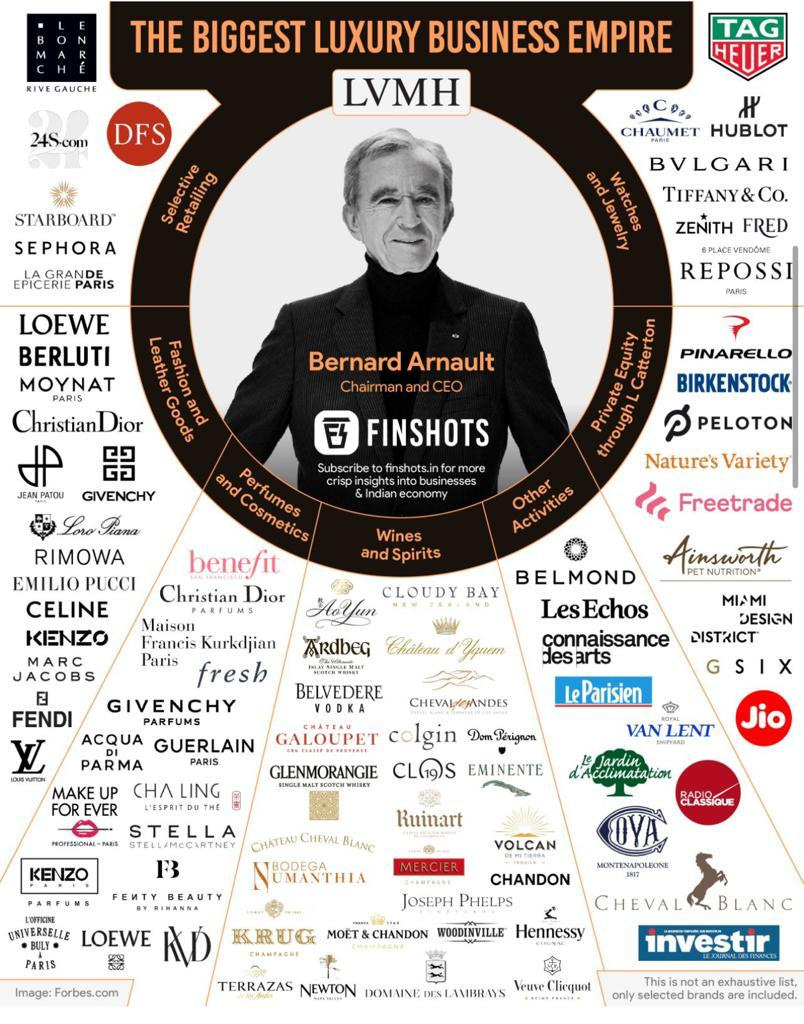
So LVMH the company that owns Louis Vuitton, Dior, Tiffany, Sephora, and basically everything you’ve ever wanted but couldn’t afford just posted their Q4 2025 earnings.
The headline number: €80.8 billion in annual revenue.
The number that matters: Fashion & Leather Goods (the crown jewel) declined 3% in Q4. Operating profit fell 9%. Net profit down 13%.
For context: This is LVMH. The biggest luxury group on the planet. The company that prints money when everyone else is struggling. The “safe haven” of luxury investing.
And they just posted their worst performance in years.
Now, before you think “luxury is dead,” let me show you what’s actually happening because buried in these numbers is the most important story in consumer right now:
The aspirational buyer is tapping out. The ultra-wealthy are still spending. And the brands caught in the middle are about to get crushed.
Let me break down what LVMH’s earnings actually reveal about where luxury is heading and what it means for anyone building premium consumer brands in 2026.
The Numbers That Tell the Real Story
Let’s start with what LVMH reported:
Full Year 2025:
Revenue: €80.8B (flat year-over-year)
Operating profit: €17.8B (down 9%)
Operating margin: 22% (down from 26% pandemic peak)
Net profit: Down 13% year-over-year
Operating free cash flow: €11.3B (up 8%)
Net debt: €6.85B (down 26%)
Q4 2025 Breakdown by Division:
Fashion & Leather Goods:
Q4 organic growth: -3%
Full year organic growth: -5%
Generates nearly 50% of total revenue
Watches & Jewelry:
Q4 organic growth: +3%
Tiffany organic revenue: +9% in Q4
Bvlgari: Record year
Outperforming leather goods
Selective Retailing (Sephora, DFS):
Organic growth: +4%
Sephora growing twice the market rate
Operating profit: +28%
Perfumes & Cosmetics:
Organic growth: Flat
Profitability improved
Sauvage still #1 men’s fragrance globally
Wines & Spirits:
Organic growth: -5%
Operating profit: -25%
Cognac suffering from US-China trade tensions
Now here’s what makes these numbers fascinating: LVMH isn’t struggling because they’re running the business poorly. They’re struggling because the consumer is fundamentally changing.
The Aspirational Buyer Exodus
Let me show you the pattern that explains everything:
Who’s still spending in luxury:
Ultra-wealthy (net worth $30M+):
Still buying Hermès Birkins at $50K+
Still buying Patek Philippe watches at $100K+
Still buying Cartier jewelry at $20K+
Affluent professionals (net worth $1-5M):
Pulled back on Louis Vuitton bags ($3K)
Pulled back on Dior handbags ($5K)
Pulled back on “aspirational luxury”
Aspirational buyers (income $100-200K):
Stopped buying entry-level luxury entirely
Shifted to contemporary brands or saved money
Logo fatigue setting in
The data proves this:
Hermès (ultra-luxury):
Q4 2025: +13% organic growth
Full year: +12% growth
LVMH (aspirational luxury):
Q4 2025: Fashion & Leather -3%
Full year: -5%
The divergence is the story.
When ultra-luxury (Hermès) grows 13% and aspirational luxury (LVMH) declines 5%, it’s not about luxury dying. It’s about the aspirational consumer pulling back.
Why Fashion & Leather Goods Matters Most
LVMH has five divisions. But Fashion & Leather Goods is the empire:
Why this division is critical:
1. Revenue concentration:
Generates ~48% of total LVMH revenue
€38B+ of the €80B total
When this slows, everything slows
2. Margin profile:
Highest operating margins in the portfolio (~35-40%)
Louis Vuitton bags cost $300 to make, sell for $3,000
When this division suffers, profits suffer disproportionately
3. Brand halo:
Louis Vuitton and Dior drive brand perception for entire group
Weakness here signals luxury weakness broadly
Market watches this division obsessively
The -3% Q4 decline isn’t just a number. It’s a signal that the engine powering LVMH is sputtering.
Geographic breakdown reveals the problem:
China:
H2 2025 returned to growth (positive sign)
Consumer confidence improving
But: Not enough to offset other regions
United States:
Consumers remain cautious
Inflation concerns persist
Aspirational buyers pulling back
Europe:
Tourist spending declined
Domestic consumption weak
Structural headwind
Japan:
Normalized after 2024’s yen-driven boom
Currency tailwind faded
Back to baseline
Even heritage brands with 100+ years of equity aren’t immune when the aspirational buyer pulls back.
Where LVMH Is Actually Winning
Now here’s where it gets interesting. Despite revenue declining, LVMH is protecting what matters: cash flow and balance sheet.
Operating margin:
2021-2022 peak: 26%
Q4 2025: 22%
Down, but still exceptional for any business
Operating free cash flow:
Up 8% to €11.3B
This is remarkable given declining revenue
Net debt:
Down 26% to €6.85B
Balance sheet strengthening, not weakening
What this tells us:
LVMH isn’t chasing topline growth at all costs. They’re protecting margins through operational discipline:
The playbook:
Cut discretionary opex (events, marketing that doesn’t convert)
Optimize inventory (no discounting to move product)
Selective hiring (not mass layoffs, but careful additions)
Focus investment on proven growth engines (Tiffany stores, Sephora expansion)
Why this matters:
In growth markets, topline revenue growth is the game.
Everyone’s optimizing for:
More stores
More SKUs
More marketing
More everything
In contracting markets, margin preservation is the game.
Winners optimize for:
Maintaining pricing power
Protecting brand equity
Cash flow generation
Surviving with fortress balance sheet
LVMH is playing the second game now. And they’re winning it.
The Division That’s Quietly Crushing It: Sephora
Whilst everyone focuses on Louis Vuitton’s struggles, Sephora is printing money.
Selective Retailing (mostly Sephora):
Organic growth: +4% (whilst Fashion & Leather declined -3%)
Operating profit growth: +28%
Growing twice the market rate
Launched Rhode (Hailey Bieber’s brand) with record-breaking results
Why Sephora works right now:
1. Lower price points
$30 lipstick vs. $3,000 handbag
Accessible luxury during economic uncertainty
Aspirational buyers trade down from handbags to makeup
2. Consumable model
You need to replace makeup/skincare every 2-6 months
Handbags last years
Recurring revenue > one-time purchase
3. Discovery platform
Sephora isn’t just selling products, they’re curating discovery
Customers come for brands they don’t know yet
Experience > transaction
4. Digital + physical integration
Best-in-class omnichannel experience
Virtual try-on, personalization, loyalty programme
Data moat
The insight:
When luxury slows, beauty accelerates. It’s the “accessible indulgence” that consumers trade down to.
This is exactly what we saw with Rhode Beauty:
Launched at Sephora with LVMH backing
Record-breaking launch
34% EBITDA margins, 11% marketing spend
Working precisely because it’s accessible premium, not aspirational luxury
What LVMH’s Performance Tells Us About Luxury’s Future
Based on LVMH’s results and Bernard Arnault’s own comments, here’s what’s coming:
The Divergence Will Accelerate
Ultra-luxury (Hermès, Brunello Cucinelli, Loro Piana):
Will keep growing
Ultra-wealthy unaffected by macro conditions
Scarcity + craftsmanship = pricing power forever
Aspirational luxury (most of LVMH Fashion & Leather):
Will struggle for 2-3 years
Middle-class aspirational buyers tapped out
Logo fatigue + economic uncertainty = pullback
Accessible premium (Sephora, contemporary brands):
Will thrive
Consumers trading down from luxury, up from mass
This is the sweet spot for 2026-2028
Hard Luxury Will Outperform Soft Luxury
The data shows it clearly:
Watches & Jewelry (hard luxury):
LVMH: +3% growth
Richemont (Cartier, Van Cleef): Outperforming
Why: Perceived value retention
Fashion & Leather (soft luxury):
LVMH: -3% growth
Kering (Gucci, Saint Laurent): Struggling even worse
Why: Perceived as discretionary, depreciating
The consumer logic:
Cartier Love bracelet ($7,000):
Lasts forever
Retains value
Can be resold
Feels like investment
Louis Vuitton bag ($3,000):
Wears out over time
Depreciates immediately
Limited resale value
Feels like expense
When budgets tighten, consumers choose perceived investment over perceived expense.
This is why Tiffany’s integration is LVMH’s most important strategic move:
Tiffany Q4 performance:
Organic revenue: +9%
Store renovations driving traffic
Outperforming every Fashion & Leather brand
Tiffany provides LVMH exposure to hard luxury (jewelry) just as soft luxury (handbags) weakens.
Margin Discipline Becomes Competitive Advantage
In the next 2-3 years, luxury brands will split into two groups:
Group 1: Margin Preservers (LVMH, Hermès, Richemont)
Protect pricing
Cut costs selectively
Maintain brand equity
Group 2: Growth Chasers (Kering, some independents)
Discount to maintain volume
Cut prices to compete
Damage brand equity
Early evidence:
LVMH:
Operating margin: 22% (down from 26%, but still strong)
Free cash flow: +8%
Net debt: -26%
Kering:
Operating margin: Compressing faster
Gucci struggling with brand positioning
The brands that maintain pricing power through the downturn will emerge stronger. The brands that chase volume through discounting will permanently damage their positioning.
The Valuation Question: Is LVMH Expensive?
LVMH currently trades at:
P/E ratio: 21x trailing earnings
Forward P/E: 25-26x (2026 estimates)
Premium to luxury sector average
Is this justified?
Bull case:
Best-in-class portfolio (Louis Vuitton, Dior, Sephora, Tiffany)
Fortress balance sheet (€11.3B free cash flow, low debt)
Bernard Arnault (best capital allocator in luxury)
Bear case:
Growth stalled (Fashion & Leather -5% for full year)
Multiple expansion requires growth (not happening)
Aspirational consumer won’t return for 2-3 years
Premium valuation with no growth = downside risk
Analyst consensus:
Expect 5-6% sector growth in 2026
US remains main growth driver
China stabilizes but doesn’t boom
“Valuation is demanding; EPS upgrades yet to come” Barclays
Bernard Arnault’s own warning: “2026 won’t be simple. The economic context is unforeseeable and disrupted.”
Translation: Even LVMH’s CEO doesn’t expect meaningful growth in 2026.
My take:
LVMH likely trades sideways for 12-18 months until:
Aspirational consumer returns (unclear timing)
China growth accelerates (possible but uncertain)
Margins re-expand (requires revenue growth)
Without positive growth revisions, the premium valuation can’t be justified.
LVMH won’t collapse either. The balance sheet is too strong. The brands are too good. The management is too sophisticated.
Outcome: Sideways, not up or down.
What This Means for Anyone Building Premium Brands
You don’t need to own Louis Vuitton to learn from LVMH’s results. Here are the takeaways:
Lesson 1: Margin Discipline Beats Growth Chasing
When markets tighten, the brands that protect profitability survive.
LVMH’s 8% free cash flow growth amid declining sales proves this.
Bad strategy: Cut prices to maintain volume Good strategy: Maintain prices, cut costs selectively, preserve brand
Example:
Brand A (growth chaser):
Revenue declining, discounts 20% to maintain volume
Margins compress from 40% → 25%
Damages brand perception
Result: Death spiral
Brand B (margin preserver):
Revenue declining, maintains pricing
Cuts marketing waste, optimizes operations
Margins compress from 40% → 35%
Preserves brand equity
Result: Survives downturn, emerges stronger
LVMH is Brand B.
Lesson 2: Diversification Is Defense
When Fashion & Leather Goods declines 3%, Sephora growing 4% and Tiffany growing 9% offset the pain.
Portfolio breadth creates resilience.
For founders:
If you’re only in one category (handbags) and that category slows, you’re dead.
If you’re in three categories (handbags, beauty, jewelry), one can carry you through.
Don’t build single-category businesses in cyclical markets.
Lesson 3: Know Which Customer You’re Building For
The data is clear:
Ultra-wealthy: Still spending (Hermès +13%)
Aspirational buyers: Tapped out (LVMH Fashion -5%)
You must choose:
Option A: Build for ultra-wealthy
Higher prices ($10K+ products)
Scarcity model
Craftsmanship focus
Recession-resistant but harder to scale
Option B: Build for aspirational buyers
Mid-tier prices ($500-$3K)
Accessibility model
Brand marketing focus
Scalable but cyclical
Option C: Build for accessible premium
Lower prices ($50-$500)
Volume model
Discovery focus
Most resilient in downturn
Right now, Option C (Sephora’s model) is winning.
Lesson 4: Hard Goods Outperform Soft Goods in Downturns
Jewelry/watches (+3%) outperforming handbags (-3%) isn’t random.
Consumers perceive:
Jewelry = investment (retains value)
Handbags = expense (depreciates)
When budgets tighten, perceived investment wins.
Application:
If you’re launching premium products, design for perceived value retention:
Timeless design (not trendy)
Durable materials (lasts decades)
Resale market (proven secondary value)
Make your product feel like investment, not expense.
Lesson 5: Fortress Balance Sheets Create Options
LVMH’s net debt down 26% means they can:
Weather 2-3 years of uncertainty
Acquire distressed competitors opportunistically
Invest in Tiffany renovations whilst others cut
Make offensive moves whilst competitors play defense
Weak balance sheets force bad decisions:
Discounting to generate cash
Cutting investment in brand
Selling assets at bad prices
Defensive moves that damage long-term value
For founders:
Build cash reserves when times are good. That cash becomes ammunition when times are bad.
LVMH’s €11.3B in free cash flow lets them play offense. Your competitors with no cash are playing defense.
The Final Reality
LVMH’s Q4 2025 results don’t show luxury dying.
They show luxury bifurcating:
The ultra-wealthy: Still buying everything (Hermès, Richemont thriving)
The aspirational buyer: Pulling back hard (LVMH Fashion & Leather declining)
The accessible premium buyer: Trading down from luxury, up from mass (Sephora thriving)
The winners in 2026-2028 will be:
Ultra-luxury brands serving ultra-wealthy (Hermès)
Accessible premium brands serving aspirational buyers trading down (Sephora, contemporary brands)
Hard luxury brands offering perceived value retention (Tiffany, Cartier)
The losers will be:
Aspirational luxury brands caught in the middle (most of LVMH Fashion & Leather)
Brands that chase growth through discounting (Kering)
Brands with weak balance sheets that can’t weather the storm
LVMH will survive because:
They have Sephora (accessible premium)
They have Tiffany (hard luxury)
They have fortress balance sheet
They have margin discipline
But they won’t thrive until the aspirational consumer returns.
And Bernard Arnault himself says: “2026 won’t be simple.”
The question isn’t whether luxury recovers.
The question is which brands emerge stronger on the other side.
Want to go deeper? Book office hours here - intro.co/DavidOlusegun
David
P.S. LVMH’s operating profit fell 9%, but free cash flow grew 8%. That’s the difference between accounting profits and actual cash generation. In downturns, cash is king. Profits are just a number on a page. LVMH is optimizing for cash, not optics. That’s how you know management understands what’s coming.
Want to go deeper? Book office hours here - intro.co/DavidOlusegun